CBNAAT Monthly Data Archive and Data Back-up Process

The Cartridge-based Nucleic Acid Amplification Test (CBNAAT) files should be archived and saved to a CD or other appropriate external media (preferably an external drive), at least once a month to ensure that no test data are lost.

Archiving tests creates copies of the test data in “gxx” files. 

Importance of Archiving and Back-up 

Archiving allows you to:

1. Back-up data to ensure it will not be lost if the computer breaks down.
Monitoring Different Types of Errors with CBNAAT

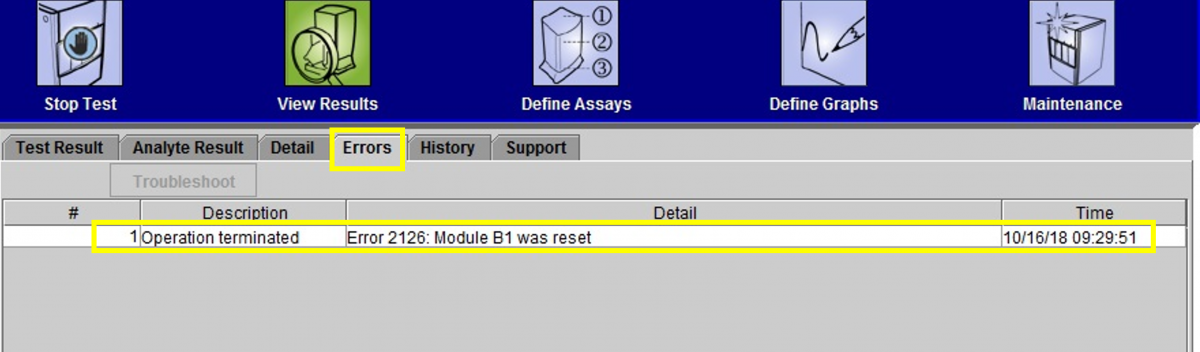
While using the CBNAAT machine in a laboratory setting, many different causes can lead to an error (indicated on-screen as ‘ERROR’, as in figure 1).

Figure 1: Window showing how to click on “Errors” to learn more about the issue

Error Message Categories

The errors are displayed by the instrument’s software to highlight various technical issues that disrupt the test process. They are grouped into five categories by the software:

MTB Detected-Rif Indeterminate Results Interpretation in CBNAAT

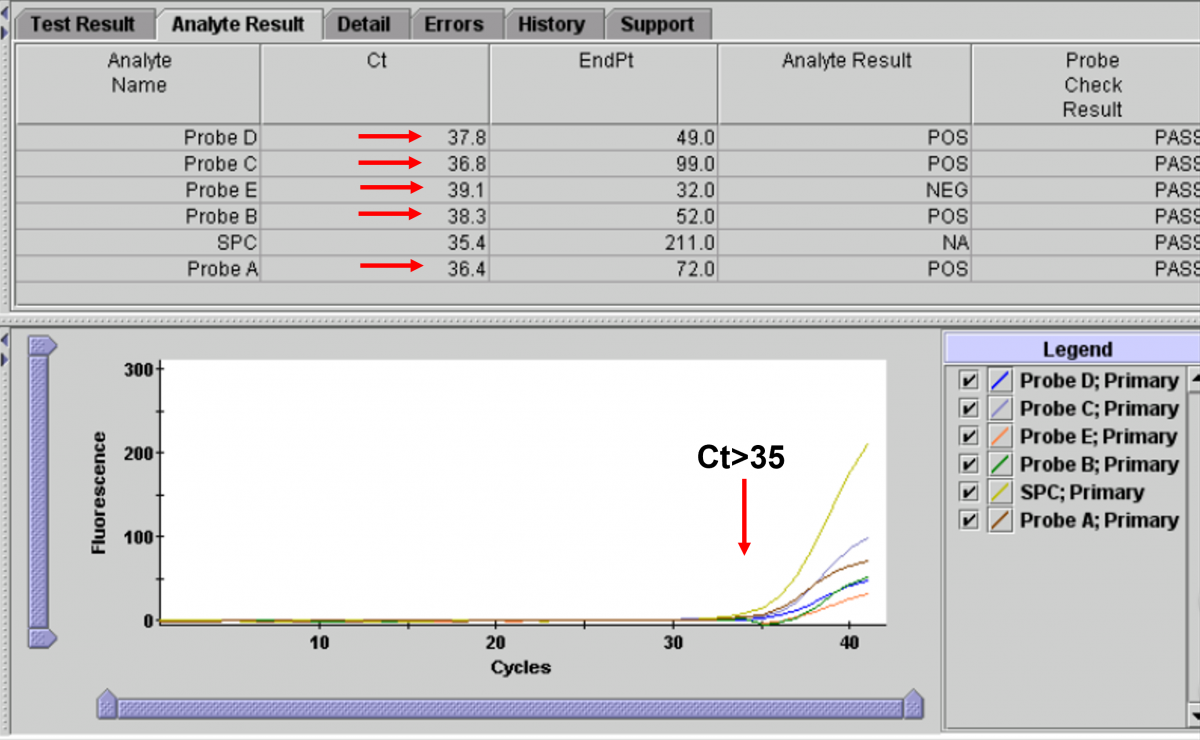
The CBNAAT software displays the result as Rif Indeterminate when the early Cycle threshold (Ct) value is greater than 35, which suggests that the bacillary load in the specimen is very low.  


The software cannot calculate the difference in the Ct values, hence the result is declared 'Indeterminate'. ​ 


This can be seen in the figure below.


Figure: Ct>35 shows Rif Indeterminate Result


Resources


Detection of MTB and RIF Resistance Results Interpretation in CBNAAT

In Cartridge-based Nucleic Acid Amplification Test (CBNAAT) assay, the basis for detection of rifampicin resistance is the difference between the first or early Cycle threshold (Ct) and the last or late Ct value, of M. tuberculosis-specific probes. Or the difference between probes with the maximum Ct value and minimum Ct value is greater than four.


Subscribe to