
Content Status where content has been uploaded and published on LMS.

Procedure for Culture Specimen Processing: Urine

The procedure for processing urine in TB cultures is as follows: 


  • Aliquot the entire volume in several centrifuge tubes.
  • Concentrate the specimen by centrifugation in 50 ml centrifuge tubes for 20-25 minutes.
  • Resuspend the pellet in each tube with 1-2 ml of sterile water and pool together with a total volume of 5-10 ml.
  • Decontaminate sediment with 4% sodium hydroxide (NaOH) for 15-20 minutes and proceed as similar to processing sputum.


The processed specimen is used to inoculate the MGIT tubes.
 

Procedure for Culture Specimen Processing: Bronchial Lavage

The procedure for processing bronchial lavage specimens in TB cultures is the same as that for sputum samples. The following aspects need to be considered: 

  • If the specimen is larger than 10 ml in volume, it needs to be concentrated by centrifugation (3000x g, 15-20 minutes) and the sediment resuspended in 5 ml sterile water.
  • Thick/ mucoid samples need to be liquefied by mixing the specimen with a pinch (50-100 mg) of N-acetyl-L-cysteine (NALC) powder.


The processed specimen is used to inoculate the MGIT tubes.


BACTEC MGIT 960 PANTA

PANTA (Figure below) is a lyophilized 5-antibiotic cocktail powder covering a broad spectrum of organisms that commonly contaminate cultures. The following are its components:


  • Polymyxin B (6000 units): Works against gram-negative bacteria
  • Amphotericin B (600 μg): Acts against yeast and fungi
  • Nalidixic Acid (2400 μg): Works against gram negatives
  • Trimethoprim (600 μg) and Azlocillin (600 μg): Works against both gram-negative and gram-positive bacteria


BACTEC MGIT 960 Reagents and Storage

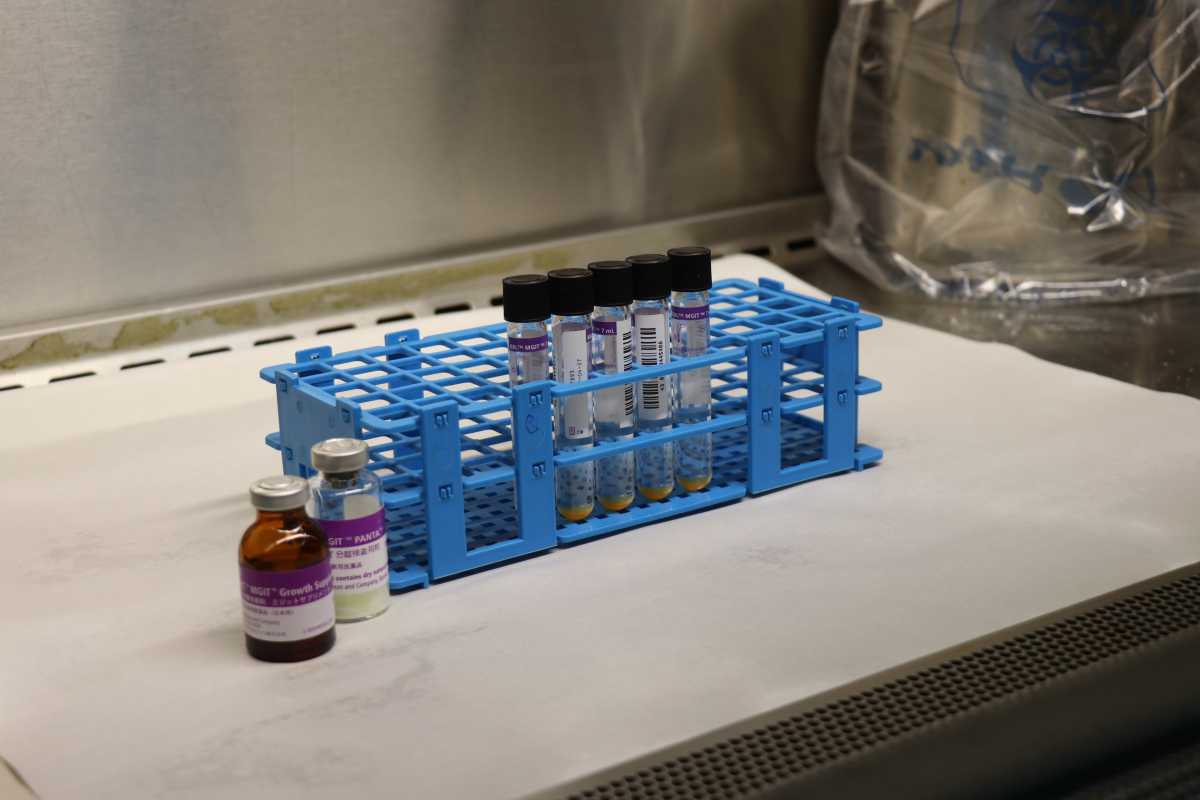
MGIT 960 reagents include (Figure):


  1. MGIT medium; each MGIT 960 tube contains 7.0 ml of modified 7H9 broth base while the manual MGIT tube contains 4.0 ml of the medium
  2. MGIT growth supplement (enrichment); growth supplement for BACTEC MGIT 960
  3. MGIT PANTA, antimicrobial supplement to prevent contamination


Figure: BACTEC MGIT 960 Reagents


Storage of Reagents


Monitoring Quality Indicators of Truenat

Monitoring of key quality indicators or performance indicators of Truenat is important to assess the functioning of the instrument, calibration/ service requirements of the instrument, competency of the technician performing the assays and inventory management. Overall quality indicators should assess:


  1. Total tests done
  2. Type of samples tested
  3. Test failure
  4. Availability of consumables
  5. Turnaround time
  6. Specimen rejected
  7. External Quality Assurance (EQA) results
  8. Instrument downtime


Subscribe to Published on LMS