
Content Status where content has been uploaded and published on LMS.

LPA Laboratory Equipment: Vortex Mixer

Key Features of Vortex Mixer


It is used in the TB laboratory to mix specimens with decontamination solutions and to homogenize solutions of TB bacilli for DNA extraction and during the preparation of the PCR Master Mix.


  • During the DNA extraction step:
    • Growth from liquid culture is vortexed to break up clumped Mycobacterium tuberculosis
    • Homogenize bacilli
    • Mix specimens with decontamination solutions​
  • Gentle vortex is used to mix reagents in PCR master mix tube.
 

Equipment Required in Different Rooms in the LPA Lab Facility

The design of the LPA facility includes the availability of different rooms to perform different steps. Each room has a set of specific equipment.


There should be a minimum of 4 separate rooms to carry out procedures. The details of these rooms and equipment are elaborated below:


1. DNA Extraction Room: For DNA extraction from decontaminated samples. Table 1 shows the equipment in the DNA extraction room.


Table 1: Equipment in the DNA Extraction Room

Electrical Supply and Back-up Power Requirements in LPA Facilities

Importance of Electrical Supply and Backup Power in the Line Probe Assay (LPA) Facility


  • Reagents used in LPA are to be stored at 4°C or -20°C. Hence, require uninterrupted electricity supply/ backup power.
  • Amplification and hybridization procedures must be conducted under closely monitored temperature conditions.
  • Uninterrupted Power Supply (UPS) connection is required during PCR amplification and use of the automated hybridization systems to avoid interruption of the procedure and subsequent loss of results.


Biosafety Requirements in LPA Facility Design

There are two types of risk while setting up a Polymerase Chain Reaction (PCR) facility for Line Probe Assay (LPA):


  1. Biohazard risk: The potential that a laboratory worker will become infected when working with live M. tuberculosis.
  2. Bio-risk: The potential that specimens or reagents will become contaminated with DNA, amplified products (amplicons) or exogenous contaminants that lead to false-positive PCR results.


Biosafety Requirements in Line Probe Assay [LPA] Laboratory

DNA extraction for Line Probe Assay (LPA) from clinical specimens can be performed in either a BSL-2 or BSL-3 laboratory, while DNA extraction from mycobacterial cultures must be performed in a BSL-3 laboratory. Only after heat-killing of the organism and DNA isolation can the sample be considered non-infectious and moved to the LPA laboratory.


The subsequent steps, i.e., amplification and post-amplification, only require a BSL-1 laboratory.


Aspects of biosafety in LPA laboratory include:


Incubation of MGIT Tubes

After inoculating the tubes, they have to be incubated in the BACTEC MGIT 960 instrument to check if there is mycobacterial growth after the stipulated time.


The steps for incubating MGIT tubes for TB cultures are as follows:


1. Enter the inoculated MGIT tubes into BACTEC MGIT 960 instrument.

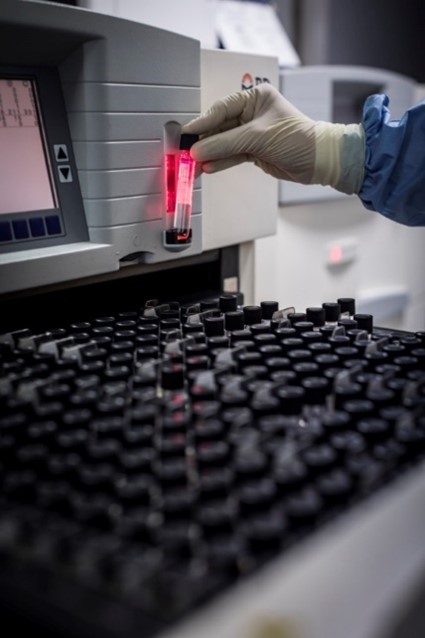
2. Scan the tube bar code and specimen bar code (if available​) (Figure 1).


Figure 1: Scanning the tube bar code


Inoculation of MGIT Tubes

Mycobacteria Growth Indicator Tube (MGIT) contains a modified Middlebrook 7H9 broth base. When supplemented with MGIT Growth Supplement and PANTA, it provides an optimum medium for the growth of a majority of mycobacterial species. All types of specimens, pulmonary as well as extra-pulmonary (except blood), can be inoculated into MGIT for primary isolation of mycobacteria.


The steps for inoculating MGIT tubes are elaborated below:


Procedure for Culture Specimen Processing: CSF and other body fluids

Body fluids collected aseptically (cerebrospinal fluid, synovial fluid, pleural fluid) can be inoculated into MGIT medium without decontamination (with the addition of PANTA). However, since it is difficult to maintain sterile conditions throughout the collection of specimens, it is recommended that all specimens be decontaminated. 


Aseptically collected specimens need only light decontamination (NALC without NaOH). Steps for processing such specimens are:


Subscribe to Published on LMS