

Content Status
Type
Linked Node
Specimen Processing for TB Cultures
Learning ObjectivesSpecimen Processing for TB Cultures
Content
Sputum specimens are viscous materials contaminated with normal flora. Therefore, processing involves pre-treatment of the sputum specimens via:
- Digestion: To free the TB bacilli from the mucus in which they may be embedded.
- Decontamination: To eradicate normal flora that grows more rapidly than TB bacilli, and would interfere with the ability to recover TB bacilli.
- Homogenization: Of the digested materials.
- Concentration: Of the TB bacilli by centrifugation before smear preparation and media inoculation.
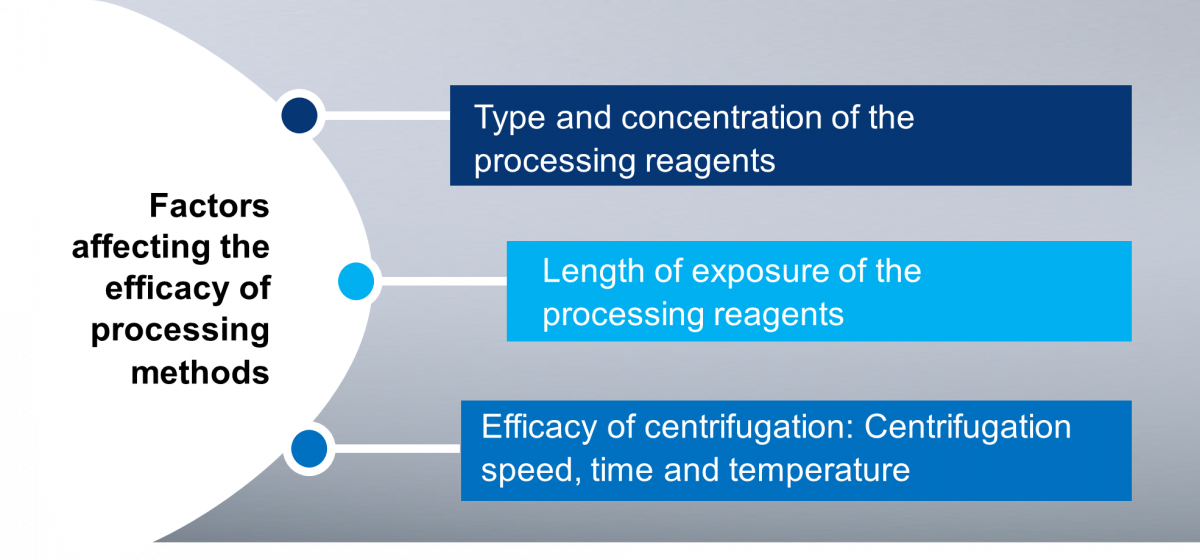
Figure: Factors Affecting the Efficacy of Processing Methods
Methods of Culture Specimen Processing
Various processing methods are used for TB specimens; amongst them, the most common methods are:
- N-acetyl-L-cysteine - sodium hydroxide (NALC-NaOH) method: It is the mildest decontamination method which can kill about 33% of mycobacteria in a clinical specimen. It can be used with both liquid and solid media.
- Petroff’s sodium hydroxide method: It is a harsher method – it can kill up to 70% of mycobacteria in specimens. Although useful with highly contaminated specimens, it is not recommended for use with liquid MGIT media.
Resources
- MGIT Procedure Manual, Mycobacteria Growth Indicator Tube (MGIT) Culture and Drug Susceptibility Demonstration Projects, FIND Training Manual.
- GLI Training Module on Specimen Processing, STOP TB Partnership.
Kindly provide your valuable feedback on the page to the link provided HERE
LMS Page Link
Content Creator
Reviewer
- Log in to post comments