Sample Processing Control [SPC] of GeneXpert Technology
In the Cartridge Based Nucleic Acid Amplification Test (CBNAAT) machine, Sample Processing Control (SPC) monitors sample processing.


Base Technical Content in text and simple images.
In the Cartridge Based Nucleic Acid Amplification Test (CBNAAT) machine, Sample Processing Control (SPC) monitors sample processing.
Once the cartridge has been loaded into CBNAAT module, system control checks:
Instrument system check control verifies the:
If any aspect of system check control fails, an ERROR is reported.
The CBNAAT System automatically performs internal quality control for each sample.
During each test, the system uses the following inbuilt controls:
System Check Control (SCC)
Sample Processing Control (SPC)
Probe Check Control (PCC)
The External Quality Assessment (EQA) for Fluorescent Microscopy (FM) follows the same basic principles as for sputum smear microscopy using Ziehl-Neelsen (ZN) staining:
Differences between EQA for FM and sputum smear stained by ZN method:
The Laboratory Technician (LT) must safely discard contaminated, biohazard waste generated by tuberculosis (TB) laboratories. This waste must be discarded along with the overall waste of the health facility in which TB services are provided.
There are 2 types of waste generated from DMC laboratory settings:
Disposal of Sputum Cups with Left-over Specimen, Lids and Wooden Sticks
One of the methods for internal monitoring of the quality of the microscopy process is the use of Quality Control (QC) slides.
QC is a systematic internal monitoring of working practices, technical procedures, equipment and materials, including quality of stains.
Quality Control Positive (QCP) and Quality Control Negative (QCN) slides are used for sputum smear microscopy quality monitoring.
Process for quality control using QCP and QCN is as follows:
A cold chain is a system of transporting and storing TB specimens at optimum temperature while being transported from the peripheral health institutions to the diagnostic labs to reduce the growth of contaminating endogenous respiratory organisms.
Cold chain requirements for transportation of TB diagnostic specimens are (Figure 1):
The following are a few of the steps for comprehensive infection control measures:
The Medication Event Reminder Monitor (MERM) is a digital pillbox that has been designed to monitor Multidrug-resistant TB (MDR-TB) treatment in resource-constrained settings, using relatively affordable technology and drugs provided by the National TB Elimination Programme (NTEP).
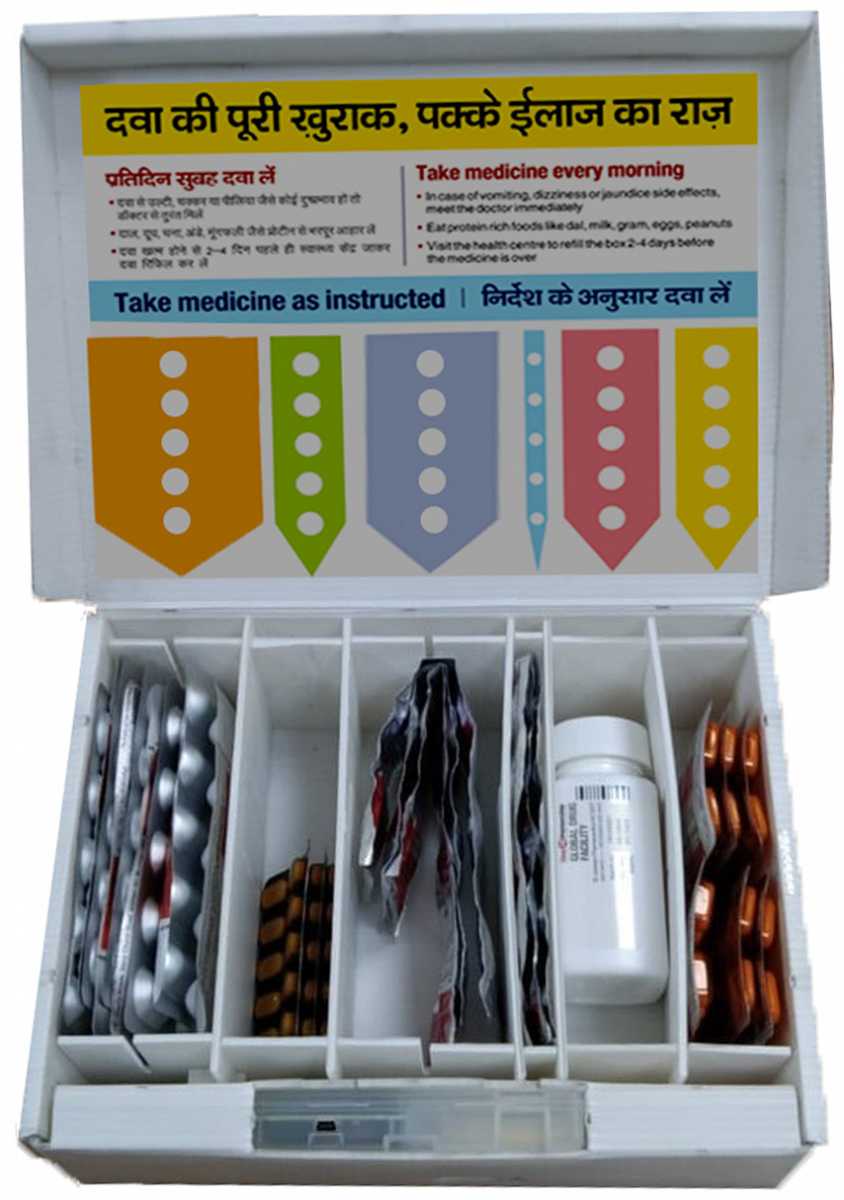
Figure: MERM Container for Shorter/ Longer Oral MDR-TB Regimen; Source: Guidelines for PMDT in India, 2021, p143.
Providing health education and counselling to each Drug-resistant TB (DR-TB) patient is an essential step in the management of DR-TB patients.
It is important to consider the long duration of treatment and the multitude of factors that may influence the overall treatment continuation and success.
The treatment duration of any DR-TB regimen is long enough for the patient who needs multiple sessions of counselling, preferably more frequently in the initial phase of treatment.