
Base Technical Content in text and simple images.

Procedure for Culture Specimen Processing: Pulmonary specimens

These are the steps to be followed when processing pulmonary specimens in TB culture laboratories:


Beginning the Specimen Processing Procedure:


  1. Process only one specimen at a time, and do not leave open containers or open centrifuge tubes in the Bio Safety Cabinet (BSC).
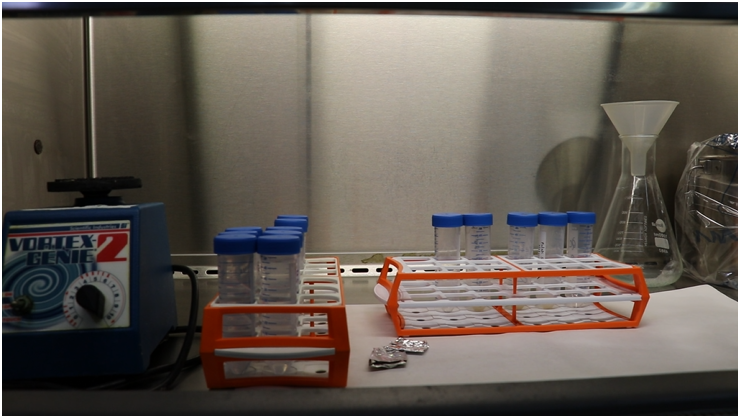
  2. Process the available specimen in a 50 ml sterile, plastic, screw-capped centrifuge tube (Figure).
 

Culture Specimen Processing: Advantages and Disadvantages of NALC-NaOH Method

In the N-Acetyl-L-Cysteine - Sodium Hydroxide (NALC-NaOH) method:

  • NaOH works as a decontaminating agent.
  • Sodium citrate binds with the heavy metal ions that might be present in the specimen, that could inactivate NALC.
  • NALC works as a mucolytic agent that allows NaOH to be used at a lower final concentration of 1% and aids in liquefying sputum to release the trapped bacilli.


Advantages of NALC – NaOH Method

Planning for ACF

Active case-finding (ACF) approaches bring essential TB services closer to the community. It has high potential for improving TB case detection and reach people with TB currently missed by the health system. To maximize gains from ACF, it is important that the interventions are planned in advance. 

MGIT 960 Instrument: Principle for Culture

Mycobacteria Growth Indicator Tube (MGIT) contains:


  • 7.0 ml of modified Middlebrook 7H9 broth base
  • Growth supplement essential for the growth of Mycobacterium tuberculosis complex
  • MGIT PANTA, antibiotic mix to prevent contamination
  • Oxygen-quenched fluorochrome (tris 4, 7-diphenyl-1, 10-phenonthroline ruthenium chloride pentahydrate) embedded in silicone at bottom of the tube


Principle


Culturing of Mycobacteria: Labelling of Reagents

All reagents used in the laboratory culturing Mycobacteria have to be labelled.


Reagent containers are to be labelled with the:

  • Name of the reagent
  • Date prepared
  • Expiry date
  • Batch lot number
  • Technician initials


Mycobacteria Growth Indicator Tube (MGIT) tubes are labeled as “GC” for Growth Control suspension in the MGIT tube specimen, similarly for Culture and Drug Sensitivity Testing (C&DST), barcode label is required for each MGIT tube.


Culturing of Mycobacteria: Process of Preparation of 0.067M Phosphate Buffer

There are many types of phosphate buffers available. However, the most commonly used phosphate buffer consists of a mixture of monobasic dihydrogen phosphate and dibasic Mono hydrogen phosphate.


By varying the amount of each salt, a range of buffers can be prepared that buffer well between pH 5.8 and pH 8.0. Phosphates have a very high buffering capacity and are highly soluble in water.


Process of Preparation of 0.067M Phosphate Buffer:

Subscribe to A0