Base Technical Content in text and simple images.

CBNAAT Cartridge Loading

  • Use the sterile transfer pipette provided in the CBNAAT kit to draw liquefied sample into the transfer pipette
    • The minimum amount to be loaded into the cartridge is 2 ml
    • Do not process the sample if there is insufficient volume
  • Open the cartridge lid
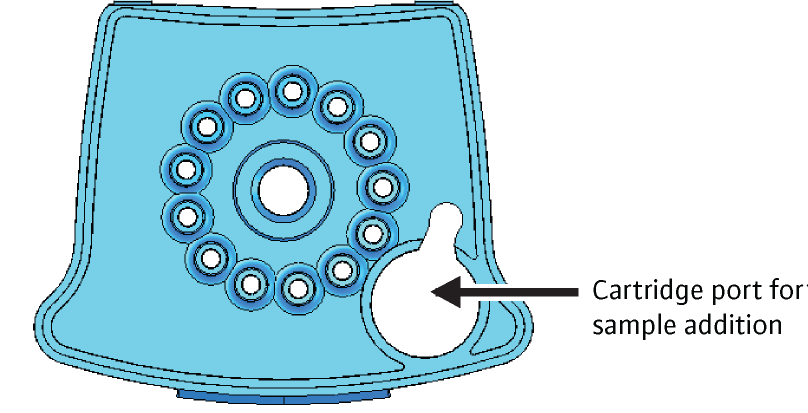
  • Transfer the sample into the open port (Figure 1) of the CBNAAT cartridge and dispense slowly to minimize the risk of aerosol formation
 

Specimen Processing for CBNAAT

The CBNAAT system integrates and automates sample processing with amplification and detection of the target sequences

For sample processing, sample reagent is provided in CBNAAT kit, 8ml volume pack per each cartridge

  • The sample reagent solution is clear but may range from colourless to golden yellow

Processing of clinical specimens should be performed as per laboratory biosafety standards

Diagnostic Algorithm for TB Disease in NTEP

Persons with cough of more than 2 weeks, with or without other symptoms suggestive of TB, should be promptly identified as presumptive pulmonary TB patients.


Under NTEP, they are to be referred to the designated microscopy centre (DMC) for sputum examination using the Request form for examination of biological specimen.


Patients belonging to the key population EPTB, HIV and Paediatrics groups (after X-ray screening in case of children) can be directly referred for NAAT.


Autoclave as an Instrument for Biosafety in TB Laboratory

Autoclaves are key biosafety equipment in tuberculosis (TB) laboratories.

It allows decontamination of used instruments and articles and makes it safe for reuse (or discarding).

Autoclaves kill all pathogens on the articles which will be added to it for sterilization. Hence the articles autoclaved will be sterile (no biohazard pathogens on them).


Principle of Procedure

How to Use Refrigerated Centrifuges

Principle of procedure

  • A centrifuge separates particles in a liquid by sedimentation. Dense particles sediment first, followed by lighter particles
  • To obtain a high sedimentation efficiency of 95%, it is necessary to centrifuge the TB specimens at 3,000 g for 15-20 minutes
  • The high speed and time used to achieve effective sedimentation efficiency lead to heat build-up in the centrifuge and the specimens.  To prevent cell death due to overheating, the use of a refrigerated centrifuge is recommended


Biosafety in TB Laboratory: Factors to be Considered in TB Laboratory Risk Assessment

Staff working with patient specimens and live mycobacterial cultures must operate under appropriate biosafety conditions with adequate infection control measures in place, including staff health checks.


For the safety of personnel working in TB labs, the following factors must be considered to avoid the risk associated with pathogenicity and transmission of TB bacilli.


The 4 key factors that must be considered during risk assessment of TB labs include:


Biosafety in TB Laboratory: Risk Assessment Process

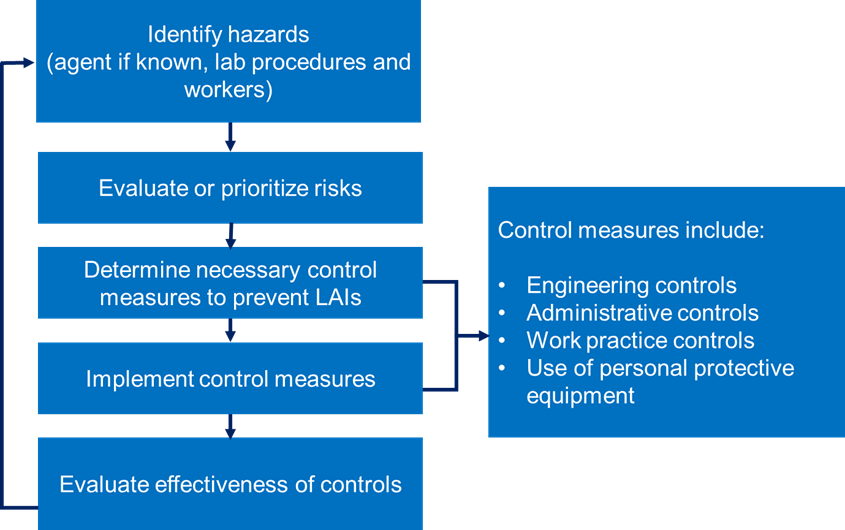
Risk assessment is the process that enables the appropriate selection of microbiological practices, safety equipment, and facility safeguards that can prevent laboratory-associated infections (LAIs). 


The figure below shows a flowchart that presents the risk assessment process for a biological hazard.


Figure: Risk assessment process for a biological hazard


Risk assessments for TB laboratories should consider:

Reporting First-line Line Probe Assay [FL-LPA] Results

Results of the First-line Line Probe Assay (FL-LPA) are entered in Nikshay and downloaded as the culture and drug susceptibility test (CDST) register.


Information on the patient, facility, reason for testing and test results are captured, and are shown in the table below.


DETAILS

TEST RESULTS

TestID

Visual_appearance_of_Sputum

DateOfTestUpdatedInNikshay

Sample

Subscribe to A0