Content Status where content has been uploaded and published on LMS.

Biosafety in TB Laboratory: Factors to be Considered in TB Laboratory Risk Assessment

Staff working with patient specimens and live mycobacterial cultures must operate under appropriate biosafety conditions with adequate infection control measures in place, including staff health checks.


For the safety of personnel working in TB labs, the following factors must be considered to avoid the risk associated with pathogenicity and transmission of TB bacilli.


The 4 key factors that must be considered during risk assessment of TB labs include:
 

Biosafety in TB Laboratory: Risk Assessment Process

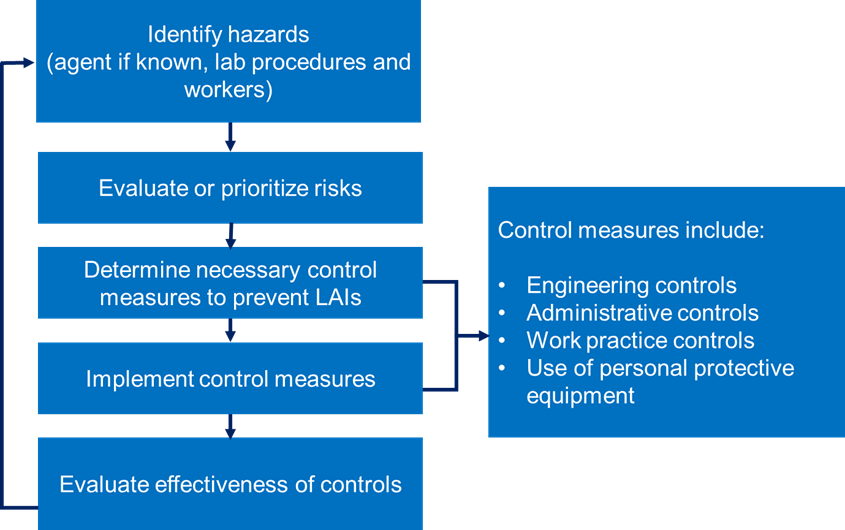
Risk assessment is the process that enables the appropriate selection of microbiological practices, safety equipment, and facility safeguards that can prevent laboratory-associated infections (LAIs). 


The figure below shows a flowchart that presents the risk assessment process for a biological hazard.


Figure: Risk assessment process for a biological hazard


Risk assessments for TB laboratories should consider:

Reporting First-line Line Probe Assay [FL-LPA] Results

Results of the First-line Line Probe Assay (FL-LPA) are entered in Nikshay and downloaded as the culture and drug susceptibility test (CDST) register.


Information on the patient, facility, reason for testing and test results are captured, and are shown in the table below.


DETAILS

TEST RESULTS

TestID

Visual_appearance_of_Sputum

DateOfTestUpdatedInNikshay

Sample

MGIT 960 Instrument: Operation

The MGIT 960 is a sensitive instrument to be operated by trained and competent staff. To carry out the liquid culture using this instrument, following steps need to be performed.


Table: Operation of the MGIT 960 Instrument

Step 1


To load the tubes, open the desired drawer. 


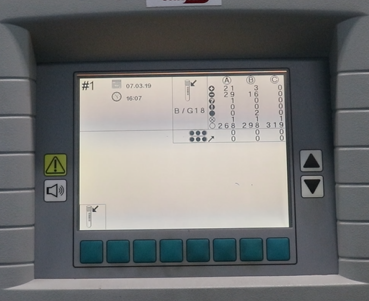
Once the drawer is open, select the desired workflow on the LCD display, in this case, Tube Entry.

Monitoring of Treatment by Smear and Culture

Smear microscopy and culture play an important role in monitoring the response to TB treatment. In NTEP, smear microscopy and culture has been prescribed to monitor the treatment response and at specific time points based on different treatment regimens. The programme also explains the actions that need to be taken based on the follow-up results.


Monitoring of tuberculosis treatment is shown in the table below.

Table: Monitoring of TB treatment by smear and culture

TYPE OF TREATMENT

Subscribe to Published on LMS