
Content Status where content has been uploaded and published on LMS.

How to reach out to TB patients in the private sector

Existing tools to improve TB care services in the private sector, adopted by the National TB Elimination Programme (NTEP) are:

  • Standards for Tuberculosis (TB) care in India
  • Mandatory TB notification
  • Use of NIKSHAY
  • Ban on sero-diagnostics
  • Amendments in H1 schedule


The learnings that guide the efforts to invoke support from the private sector and provide public services to its patients include the following:
Non-tuberculous Mycobacteria [NTM]

Non- Tuberculosis Mycobacteria (NTM) are Mycobacteria other than Mycobacteria tuberculosis (MOTT) that are ubiquitously distributed in environment. They are also called atypical mycobacteria or anonymous mycobacteria.


They are known to cause human disease. Most commonly, NTM infects skin, soft tissue, lymph nodes, wounds, bones, joints and implant devices.


Laboratory Equipment: Thermometer

Thermometers are used to measure temperature​. There are 4 types of thermometers used in line probe assay (LPA) laboratories:

  1. Electronic Thermo Hygrometer
  2. Alcohol Thermometer
  3. Digital Maxima – Minima Thermometer
  4. Dial Spring Thermometer


Electronic Max-Min Thermo-Hygrometer

It monitors the temperature and humidity, and has the following features:


CBNAAT Cartridge Loading

  • Use the sterile transfer pipette provided in the CBNAAT kit to draw liquefied sample into the transfer pipette
    • The minimum amount to be loaded into the cartridge is 2 ml
    • Do not process the sample if there is insufficient volume
  • Open the cartridge lid
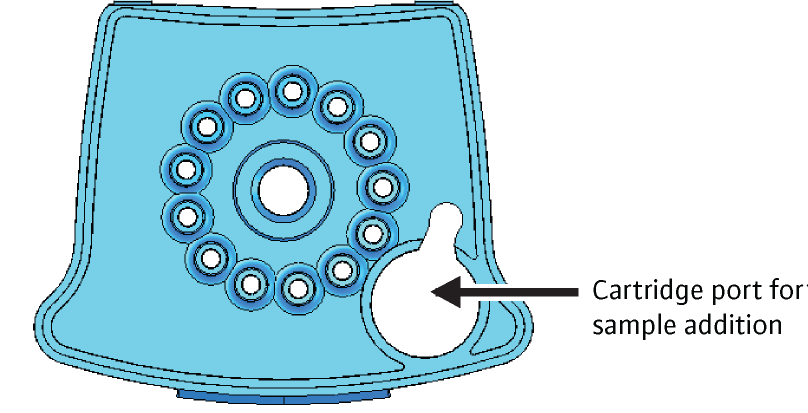
  • Transfer the sample into the open port (Figure 1) of the CBNAAT cartridge and dispense slowly to minimize the risk of aerosol formation


Specimen Processing for CBNAAT

The CBNAAT system integrates and automates sample processing with amplification and detection of the target sequences

For sample processing, sample reagent is provided in CBNAAT kit, 8ml volume pack per each cartridge

  • The sample reagent solution is clear but may range from colourless to golden yellow

Processing of clinical specimens should be performed as per laboratory biosafety standards

Diagnostic Algorithm for TB Disease in NTEP

Persons with cough of more than 2 weeks, with or without other symptoms suggestive of TB, should be promptly identified as presumptive pulmonary TB patients.


Under NTEP, they are to be referred to the designated microscopy centre (DMC) for sputum examination using the Request form for examination of biological specimen.


Patients belonging to the key population EPTB, HIV and Paediatrics groups (after X-ray screening in case of children) can be directly referred for NAAT.


Autoclave as an Instrument for Biosafety in TB Laboratory

Autoclaves are key biosafety equipment in tuberculosis (TB) laboratories.

It allows decontamination of used instruments and articles and makes it safe for reuse (or discarding).

Autoclaves kill all pathogens on the articles which will be added to it for sterilization. Hence the articles autoclaved will be sterile (no biohazard pathogens on them).


Principle of Procedure

How to Use Refrigerated Centrifuges

Principle of procedure

  • A centrifuge separates particles in a liquid by sedimentation. Dense particles sediment first, followed by lighter particles
  • To obtain a high sedimentation efficiency of 95%, it is necessary to centrifuge the TB specimens at 3,000 g for 15-20 minutes
  • The high speed and time used to achieve effective sedimentation efficiency lead to heat build-up in the centrifuge and the specimens.  To prevent cell death due to overheating, the use of a refrigerated centrifuge is recommended


Subscribe to Published on LMS