
-
CDST_LT: General concepts in TB treatment
FullscreenFirst line anti TB drugs
ContentFirst line drugs are the least toxic and most effective drugs that are used in first line of therapy.
The first-line antituberculosis drugs that form the core of treatment regimens are
Drugs Characteristics
Rifampicin (R)
Helps in early clearance of tuberculosis bacteria from the specimen
Isoniazid (H)
Most Powerful drug, that destroys all population of tuberculosis organism
Pyrazinamide (Z)
Kills or stops the growth of certain populations of TB bacilli
Ethambutol (E)
Prevents the growth of TB bacilli in association with other tuberculosis drugs to prevent emergence of resistant bacilli
Resources:
Kindly provide your valuable feedback on the page to the link provided HERE
TB Drug Regimen
ContentA regimen means a prescribed systematic form of treatment for a course of drug(s). For TB treatment, Multi drug combination of regimen is followed.
All TB drug regimens have an initial intensive phase(IP) followed by a continuation phase(CP).
Following are some of the main TB drug regimens used based on the drug resistance pattern detected for TB patients.
- First-Line Anti TB Drugs(Prescribed for Drug Sensitive TB DS-TB)
- Daily weight band wise FDC
- Second-Line Anti TB Drugs (Prescribed for Drug Resistance TB - DR-TB)
- H Mono Poly Regimen
- Shorter oral Bedaquiline containing MDR-TB regimen
- Longer oral Bedaquiline containing regimen
- Shorter injectable containing MDR-TB regimen
- First-Line Anti TB Drugs(Prescribed for Drug Sensitive TB DS-TB)
Treatment Phases
ContentStandard TB Treatment is divided into two phases
- Intensive Phase(IP): In this phase,
- Kills most of the TB bacteria during the first 8 weeks of treatment, but some bacteria can survive longer
- Therefore, more drugs are administered to kill the bacteria and reduce the severity of disease.
- Treatment in this phase usually is of short duration(2 to 6 Months or more) in comparison to Continuation Phase(CP)
- Continuation Phase(CP): In this phase,
- All the remaining TB bacteria are in the dormant stage i.e., stage when growth and development of bacteria are temporarily stopped.
- Therefore, fewer but powerful antibiotics are administered to kill those bacteria.
- Treatment in this phase usually lasts longer than Intensive Phase(IP)(4 to 18 Months or more)
Kindly provide your valuable feedback on the page to the link provided HERE
- Intensive Phase(IP): In this phase,
FDCs used in NTEP
ContentImage
-
CDST_LT: TB treatment initiation and Followup
FullscreenTB Treatment Initiation
ContentIt is extremely important for any type of TB patient to be initiated on the right treatment at the earliest in order to have better treatment outcomes. Therefore as soon as the patient is diagnosed, s/he should immediately be traced with the help of the Community Health Officer (CHO) of the Health and Wellness Centres (HWC), TB Health Visitors (TBHV) / Senior Treatment Supervisor(STS) and the health facility doctors and initiated on the appropriate treatment regimen.
Steps in TB Treatment Initiation
Image
Figure: Flowchart-Treatment Initiation
Resources
- Guidelines on Programmatic Management of Drug-resistant TB (PMDT) in India, CTD, MoHFW, India, 2021.
- Training Modules (1-4) for Programme Managers and Medical Officers, CTD, MoHFW, India.
Assessment
Question
Answer 1 Answer 2 Answer 3 Answer 4 Correct answer Correct explanation Page id Part of Pre-test Part of Post-test The ultimate goal of the initial counselling session should be to empower the patient and their caregiver to make informed decisions regarding the treatment initiation. True False 1 The ultimate goal of the initial counselling session should be to empower the patient and their caregiver to make informed decisions regarding the treatment initiation. Yes Yes As soon as the patient is diagnosed, s/he should immediately be traced with the help of the Community Health Officer (CHO) of the Health and Wellness Centres (HWC), TB Health Visitors (TBHV) / Senior Treatment Supervisor(STS) and the health facility doctors and initiated on the appropriate treatment regimen
True False 1 Soon after identification pre treatment counselling is given to patient and caregivers followed by pre treatment evaluation and treatment initiation. Yes Yes Follow-up of TB patient
ContentTo know the TB treatment response and to determine that if patient is cured, TB patients are clinically evaluated at the end of every four weeks of treatment, and they are also followed up by performing sputum test at end of each treatment phase (i.e. Intensive phase and Continuation phase)
TB patients during clinical evaluations are assessed to
- Identify possible adverse reactions to medications;
- Check for any comorbid conditions;
- Weight change;
- monitor adherence; and determine treatment efficacy by observing their symptoms
Although each patient responds to treatment at a different pace, all TB symptoms should gradually improve and eventually go away.
Patients whose symptoms do not improve during the first 2 months of treatment, or whose symptoms worsen after improving initially, should be re-evaluated for adherence issues and development of drug resistance.
TB Treatment Outcome
ContentWhen a TB patient consumes all the doses under the prescribed regimen, then Treatment Outcome is declared for a Patient.
Treatment Outcome
Description
Cured
A TB patient who was microbiologically confirmed for TB at the beginning of treatment but who is smear or culture negative at the end of complete treatment
Treatment Complete
A TB patient who completed treatment without evidence of failure or clinical deterioration BUT with no record to show that the smear or culture results of biological specimen in the last month of treatment was negative, either because the test was not done or because the result is unavailable
Treatment Failure
A TB patient whose biological specimen is positive by smear or culture at the end of treatment
A case of paediatric TB who fails to have microbiological conversion to negative status or fails to respond clinically/or deteriorates after 4 weeks of compliant intensive phase shall be deemed to have failed response provided alternative diagnoses/reasons for non-response have been ruled out.
Loss to Follow up
A TB patient whose treatment was interrupted continuously for one month or more
Not Evaluated
A TB patient for whom no treatment outcome is assigned
Treatment Regimen Changed
A TB patient who is on first line regimen and has been diagnosed as having TB(DR-TB) and switched to DR-TB regimen prior to being declared as failed
Died
A patient who has died during anti-TB treatment(due to any reason)
Treatment success is considered when a TB patient either Cured or Treatment completed is accounted in treatment success
Adverse Drug Reactions
ContentAdverse Drug Reactions(ADR) are unwanted or harmful reactions experienced following the use of a drug or combination of drugs and are suspected to be related to a drug. Severity of adverse effects varies from tolerable and mild ADRs to serious and life threatening ADRs.
Figure: Various Adverse Drug Reactions
Common ADR Symptoms:
- Pain in upper abdominal area, with loss of appetite
- Nausea – Uneasy feeling with inclination to vomit, after having the drugs
- Gastritis – Burning sensation in lower chest region, bloating sensation, sourness in mouth
- Diarrhoea - Loose stool(2-3 in a day)
Long Term Post-treatment follow up of TB patients
ContentAfter completion of TB treatment, all patients should be followed up at the end of
- 6 months,
- 12 months,
- 18 months &
- 24 months
TB patients at the follow up should be screened for any clinical symptoms and/or cough. If found positive on screening, then sputum microscopy and/or culture should be considered. This is important in detecting the recurrence of TB at the earliest.
After completion of TB treatment, if the patient has not developed any clinical symptoms and/or cough and also if the microscopy remains negative during their follow up, then the patient is considered as “Relapse Free Cure from TB.”
Universal DST [UDST]
ContentDrug Susceptibility Testing (DST) refers to in-vitro testing using either of the phenotypic methods to determine susceptibility. Drug Resistance Testing (DRT) refers to in-vitro testing using genotypic methods (molecular techniques) to determine resistance.
Universal Drug Susceptibility Testing (UDST) refers to universal access to rapid DST for at least Rifampicin (R), and further DST for at least Fluoroquinolones (FQs) among all TB patients with rifampicin-resistance.
- UDST is essential to identify patients who can be initiated on Drug-resistant TB (DR-TB) treatment instead of Drug-sensitive TB (DS-TB) treatment, especially in a situation where the drug-resistance level is high.
- It should be done preferably before initiation of treatment to a maximum within 15 days of diagnosis.
- UDST is a part of national policy under the National TB Elimination Programme (NTEP).
- NTEP has undertaken decentralization of quality assured diagnostics for scale up of UDST across the country which has helped in early detection of DR-TB treatment and reducing associated morbidity and mortality.
Screening and diagnosis for DRTB
ContentDrug-resistant TB (DR-TB) diagnosis is predominantly based on laboratory diagnosis. Presumptive-TB/ DR-TB is identified by the health facility doctor during passive screening or by health staff/ community volunteers during Active Case Finding (ACF).
The vision of National TB Elimination Programme (NTEP) is to provide early diagnosis to all persons with any form of DR-TB through Universal Drug Susceptibility Testing (UDST).
All diagnosed TB patients are eligible for a NAAT test to know their Rifampicin sensitivity status. The integrated diagnostic algorithm for diagnosis of TB offers upfront Nucliec Acid Amplification Test (NAAT) for diagnosis of TB to vulnerable population. Among other eligible groups for NAAT are: non-responders to treatment and contacts of DR-TB patients are also offered upfront NAAT.
Rapid identification of DR-TB is achieved by using a combination of NAAT (CBNAAT/ Truenat) followed by sequential testing by first- and second-line Line Probe Assay (LPA) and Liquid Culture (LC) and Drug Susceptibility Testing (DST) for specific drugs as described below:
- When Rifampicin resistance is not detected by NAAT, the patient is offered First-line (FL) LPA.FL-LPA provides information on Isoniazid resistance.
- For Rif resistance/Inh resistance cases, SL-LPA is done and it provides information on resistance to Levofloxacin, Moxifloxacin and Amikacin.
- For all Rif resistance cases, LC and DST is done for Pyrazinamid, Moxifloxacin (if resistance detected by LPA), Linezolid, Clofazimine*, Bedaquiline* and Delamanid*.
(* when available)
Resources
Assessment
Question Answer 1 Answer 2 Answer 3 Answer 4 Correct answer Correct explanation Page id Part of Pre-test Part of Post-test Liquid Culture and DST is done before NAAT. True False 2 Rapid identification of DR-TB is achieved by using a combination of NAAT (CBNAAT/ Truenat) followed by sequential testing by first- and second-line LPA and then liquid culture and DST. Yes Yes
-
CDST_LT: TB preventive therapy
FullscreenTB Preventive Therapy
ContentTPT treatment options recommended under NTEP include:
- 3-month weekly Isoniazid and Rifapentine (3HP)
- 6-months daily isoniazid (6H)

Table 1: TPT Options for Target Population; Source: (Guidelines for Programmatic Management of Tuberculosis Preventive Treatment)

Table 2: TPT dosage based on age and weight band recommended by NTEP; Source: Guidelines for Programmatic Management of Tuberculosis Preventive Treatment
Resources
- Guidelines for Programmatic Management of Tuberculosis Preventive Treatment
- National Strategic Plan for TB Elimination
Assessment
Question Answer 1 Answer 2 Answer 3 Answer 4 Correct answer Correct explanation Page id Part of Pre-test Part of Post-test TPT options recommended under NTEP include which of the following? 3-month weekly Isoniazid and Rifapentine (3HP) Rifampicin 6-months daily isoniazid (6H) 1 and 3 4 TPT options recommended under NTEP include 3-month weekly Isoniazid and Rifapentine (3HP) and 6-months daily isoniazid (6H). Yes Yes Eligibility for TPT
ContentThe eligibility for TB Preventive Treatment (TPT) relies on ruling out active TB among individuals and groups who are known to have a high risk of acquiring TB.
Prioritization of the target population for TPT is based on elevated risk of progression from infection to TB disease or increased likelihood of exposure to TB disease: At-risk populations include:
1. Expanded eligible group including children >5 years, adolescents and adult Household Contacts (HHC) of pulmonary* TB patients notified in Nikshay from public and private sector (*bacteriologically confirmed pulmonary TB patients will be prioritized for enumeration of the target population for TPT)
Table 1: Target Population (Expanded Eligible Groups); Source: Guidelines for Programmatic Management of Tuberculosis Preventive Treatment.

(*bacteriologically confirmed pulmonary TB patients will be prioritized for enumeration of the target population for TPT)
TPT reduces the overall risk for TB by 60-90% among People Living with HIV (PLHIV). Adults and children (>12 months) living with PLHIV should be screened for TB using a four-symptom complex and TPT can be provided to those without symptoms or after ruling out active TB in those with TB symptoms.
All HHC of pulmonary TB patients is at substantially higher risk for progression to active TB than the general population. Hence, all HHC of pulmonary TB patients, regardless of their age, should be given TPT after ruling out TB. In children HHC under 5 years of age, TPT will be offered after ruling out active TB, without testing for TB infection. In children, HHC >5 years and adults, chest X-rays and testing for TB infection would be offered wherever available.
- Expanded to other risk groups
Individuals in other risk groups include those on immunosuppressive therapy, having silicosis, on anti-TNF treatment, on dialysis, and preparing for organ or haematologic transplantation.
Systematic TB infection testing and treatment are not recommended for people with diabetes mellitus, malnutrition, smoking, or harmful alcohol abuse unless they have other risk factors for TB, such as HIV infection or a history of contact with TB patients within their household.
Table 2: Target Population (Other Risk Groups); Source: Guidelines for Programmatic Management of Tuberculosis Preventive Treatment.

Resource
Guidelines for Programmatic Management of Tuberculosis Preventive Treatment.
Assessment
Question Answer 1 Answer 2 Answer 3 Answer 4 Correct answer Correct explanation Page id Part of Pre-test Part of Post-test TPT reduces the overall risk for TB by 60-90% among People Living with HIV (PLHIV). True False 1 TPT reduces the overall risk for TB by 60-90% among People Living with HIV (PLHIV). Testing for TB Infection
ContentFor TB infection, there are two recommended tests which can be used to identify such patients.
Tuberculin Skin Test (TST)
The skin test is done by injecting a small amount (0.5 ml) of TB antigens into the top layer of skin on your inner forearm. If one has ever been exposed to TB bacteria (Mycobacterium tuberculosis), there will be a reaction indicated by the development of a firm red bump (induration) >= 10 mm at the site within 2 days.
Image
Figure: Tuberculin Skin Test
Interferon-gamma release assay (IGRA)
IGRA is a Blood test. If one has been exposed to TB bacteria, the white blood cell in the blood will release a substance called gamma interferon when the cells are exposed to specific TB antigens.
Image
Figure: Interferon-gamma release assay (IGRA)
Resources:
- Latent Tuberculosis Infection Guideline
- Guideline for Programmatic Management of Tuberculosis Preventive Treatment in India
Kindly provide your valuable feedback on the page to the link provided HERE
Regimen for TPT
ContentThe following TPT treatment options are recommended under NTEP once active TB has been ruled out:
6H
3HP
Medicines
Isoniazid
Isoniazid + rifapentine
Duration (months)
6
3
Interval
Daily
Weekly
Doses
182
12
Pregnant women
Safe for use
Not Known
Post-treatment TPT for PLHIV: In patients previously treated for TB, post-treatment TPT has been considered in view of the 5-7 times higher risk of recurrence of TB among PLHIV and nearly 90% of these due to re-infection. Thus, all CLHIV/PLHIV who had successfully completed treatment for TB disease earlier should receive a course of TPT after completing treatment of TB.
Resources
-
Guideline for Programmatic Management of Tuberculosis Preventive Treatment in India
-
Latent TB Infection : Updated and Consolidated Guidelines for Programmatic Management, WHO, 2018
Kindly provide your valuable feedback on the page to the link provided HERE
-
-
CDST_LT: Public health actions for TB
FullscreenPublic Health Actions
ContentPublic Health Action is conducted under the NTEP programme to support and prevent further health complications among TB patients after diagnosis.
Figure: Various activities under Public Health Action
Contact Tracing and Investigation
ContentContact tracing is a process to identify people who are at a high risk of developing TB due to their contact with a known TB case.
The aim of contact tracing is to find other people with TB disease and those infected with TB
All close contacts, especially household contacts of a Pulmonary TB patient, should be screened for TB.
In paediatric TB patients, reverse contact tracing for the search of any active TB case in the child's household must be undertaken.
Particular attention should be paid to contacts with the highest susceptibility to TB infection.
Figure: Contacts to be Prioritized for contact TB screening
Direct Benefit Transfer(DBT) under NTEP
ContentDirect Benefit Transfer (DBT) is a major initiative of Government of India (GoI) whereby any government subsidy or benefit is to be transferred directly into the beneficiary's bank accounts. Intermediary government agencies only manage the process of payments, without handling actutal money.
NTEP is one of the first health programmes in India to use a fully adopt DBT. It uses an end to end electronic system, to digitise beneficiary information and transfer monetary benefits. In NTEP to process benefits, two electronic systems are used, Ni-kshay (operated by NTEP) and PFMS (Public Finance Management System, operated by the Ministry of Finance). Ni-kshay enables Direct Benefit Transfer by digitizing the beneficiaries(bank account details of patients, treatment supporters and providers) and calculates of incentives/ benefits (eligible payment) and processes them for payment through PFMS under various schemes. The various schemes operational under NTEP are:
- Nikshay Poshan Yojana(NPY)
- Tribal Support Scheme
- Treatment supporter’s Honorarium
- Incentive for Notification and Outcome
DBT Schemes in Nikshay
Linkages to Social Welfare Schemes
ContentThe government of India introduced Direct Benefit Transfer (DBT) to ensure that the benefits and subsidies are reaching the beneficiaries directly and to fasten the process. Through the process, money is directly transferred to the beneficiaries' bank account keeping the intermediary agencies and stakeholders only to manage the process of payment.
National TB Elimination Programme (NTEP) transfers all benefits to patients using the two systems:
- Nikshay
- Public Finance Management System (PFMS)
DBT Schemes available in the NTEP
Nikshay Poshan Yojana (NPY)
Objective: To provide nutritional support to TB patients at the time of notification and subsequently during the course of treatment.
Beneficiary: All unique TB patients notified on or after 1st April 2018 (including all existing TB patients under treatment for at least one month from this date).
Benefit Amount: Rs. 500 for a treatment month paid in instalments of up to Rs. 1000 as an advance.
Transport Support for TB patients in Notified Tribal Areas
Objective: To provide financial support as transport allowance for TB patients belonging to notified tribal areas (in addition to the nutritional support provided under NPY).
Beneficiary: All notified TB patients from notified tribal areas.
Benefit Amount: Rs. 750 as a one-time payment at the time of notification.
Incentives for Private Sector Providers and Informants
Objective: To provide financial incentives for notification and subsequent follow-up until completion of treatment of TB patients who are diagnosed/ treated by a private provider.
Beneficiary: Private providers (private practitioner, hospital, laboratory and chemist) who notify TB patients to NTEP on Nikshay.
Incentive Amount: Rs. 500 as a one-time payment on notification and Rs. 500 to a private practitioner or hospital for updating the patient’s treatment outcome.
Treatment Supporters’ Honorarium
Objective: To provide an honorarium to the treatment supporters for supporting TB patients.
Beneficiary: Community Treatment Supporters who support patients during treatment, leading to a successful outcome (cured or treatment completed).
Incentive Amount: Rs. 1,000 as a one-time payment on the update of outcome for drug-sensitive TB patients and Rs. 2,000 on completion of Intensive Phase (IP) and Rs. 3,000 on completion of Continuation Phase (CP) of treatment for drug-resistant TB patients.
Criteria/ Pre-requisites for Availing the Benefits in NTEP
- All benefits are processed for the respective beneficiary base on the rules and eligibility criteria defined above except for the treatment supporter, which needs to be manually uploaded by the TB Unit (TU) level staff.
- Beneficiary ID in Nikshay will be assigned to all patients which are unique. The benefits processed will be tracked under this ID. All beneficiaries need to register their bank details in Nikshay to enable DBT.
Treatment Supporter
A trained treatment supporter, who can be a health worker or community volunteer, will assist the patient to adhere to the drugs, provide counselling support, nutritional support, screen for adverse reactions, psycho-social support, comorbidity management and follow-up laboratory investigations.
The Treatment Support Honorarium is available as per the following eligibility:
- The treatment Supporter must be registered in Nikshay and designated as the primary Treatment Supporter.
- The linked patient must complete treatment or has to be cured.
- The treatment Supporter should not be a salaried government employee.
Resources
Direct Benefit Transfer Manual for National Tuberculosis Elimination Programme, CTD, 2020.
Assessment
Question
Answer 1
Answer 2
Answer 3
Answer 4
Correct Answer
Correct Explanation
Only patients and treatment supporters seeking treatment in the public sector are eligible for DBT benefits.
True
False
2
Private providers are eligible for financial incentives for notification and subsequent follow-up until completion of treatment of TB patients who are diagnosed/ treated by them.
-
CDST_LT: Comorbidity screening and testing
FullscreenComorbidity & special situation with TB
ContentSeveral medical conditions are risk factors for TB and poor TB treatment outcomes. Similarly, TB can complicate the course of some diseases. Therefore, it is important to identify these comorbidities in people diagnosed with TB to ensure early diagnosis and improved outcomes. When these conditions are highly prevalent in the general population, they can significantly contribute to the TB burden. Consequently, reducing the prevalence of these conditions can help prevent TB.
TB shares underlying social determinants with many of these conditions. Addressing the social determinants of health is a shared responsibility across disease programmes and other stakeholders within and beyond the health sector.
Figure: Various comorbid and special situation related with tuberculosis
HIV in TB Patients
ContentThe primary impact of HIV on TB is that the risk of developing TB becomes higher in patients with HIV. Overall, HIV-infected persons have an approximately 8-times greater risk of TB than persons without HIV infection.
Screen TB PLHIV patients for symptoms of TB and HIV
Figure: Screening steps for TB - HIV patients
Treatment for TB HIV Patients
- All TB patients who have been diagnosed and registered under NTEP should be referred for screening for HIV.
- Referral of TB patients for screening for HIV and its recording & reporting is the responsibility of the Peripheral Health Institutions(PHI) where TB treatment is initiated.
- TB patients diagnosed with HIV will receive the same duration of TB treatment with daily regimen as non-HIV TB patients.
- TB patients must be referred to the nearest ART(Anti - Retroviral Treatment) centre for management of HIV.
Diabetes in TB Patients
ContentAs a consequence of urbanization as well as social and economic development, there has been a rapidly growing epidemic of Diabetes Mellitus(DM). India has the second largest number of diabetic people in the world.
Screen TB patients for symptoms of diabetes
Figure: Screening steps for TB - Diabetic Patients
Treatment for TB Diabetes Patients
- All TB patients who have been diagnosed and registered under NTEP will be referred for screening for Diabetes.
- Referral of TB patients for screening for DM and its recording & reporting is the responsibility of the Peripheral Health Institutions(PHI) where TB treatment is initiated.
- TB patients diagnosed with diabetes will receive the same duration of TB treatment with daily regimen as non-diabetic TB patients.
- TB patients must be referred to the nearest healthcare facility for management of DM.
- Regular monitoring of blood sugar levels is advised.
Pregnancy and Lactation in TB Patients
ContentThe presence of tuberculosis disease during pregnancy, delivery, and postpartum is known to result in unfavourable outcomes for both pregnant women and their infants. These outcomes include a roughly two-fold increased risk of preterm birth, low birth weight, intrauterine growth restriction, and a six-fold increase in perinatal death.
Screen TB patients in Pregnancy & Lactating Patients
Figure: Screening Steps in special situation - Pregnancy and Lactating TB Patients
Treatment for TB - Pregnant & Lactating Patients
- Cases of pregnant/lactating women with active TB should be referred to the nearest health facility of NTEP for further management.
- They should be continued on iron and folic acid and other vitamins and minerals to complement their maternal micronutrient needs.
- In situations when calcium intake is low, calcium supplementation is recommended as part of antenatal care.
COVID-19 in TB patients
ContentTuberculosis and COVID-19 are infectious diseases which primarily attack the lungs. They present with similar symptoms of cough, fever and difficulty in breathing, although TB disease has a longer incubation period and a slower onset of disease.
Screen patients for symptoms of TB and COVID-19
Figure: Screening steps for TB - COVID 19 Patients
Management of TB & COVID-19 Patients
People with TB are likely to be at increased risk of COVID-19 infection, illness and death. So, TB patients should take precautions as advised by health authorities to be protected from COVID-19 and continue their TB treatment as prescribed.
Prevention: While both TB and COVID-19 are spread by close contact between people, the exact mode of transmission differs. Thus, the patient should be explained the following measures to control disease spread.
- Apart from that keeping rooms well ventilated, avoiding crowds and Respiratory precautions are thus important in the control of COVID-19 and TB Disease
-
CDST_LT: TB treatment adherence
FullscreenTB Treatment Adherence
ContentTuberculosis(TB) is curable if patients are treated with effective, uninterrupted anti-tuberculous treatment. Treatment adherence is critical for curing individual patients, controlling the spread of infection in the community, and minimizing the development of drug resistance.
Adherence to treatment means that a patient follows the recommended course of treatment by taking all the prescribed medications for the entire length of time, as necessary. In other words, “right dose for the right duration”.
In Drug Sensitive Tuberculosis(DSTB), a TB patient completes 168 doses of TB treatment and adheres to TB treatment.
Importance of Treatment adherence
ContentAdherence to tuberculosis(TB) treatment is important for promoting individual and public health. Poor adherence to TB treatment results in:
- More individual suffering and death,
- Costly treatment as treatment regimens lengthen and
- Increases the risk for Drug Resistant Tuberculosis
Proper treatment of all forms of TB is critical to reducing individual morbidity and mortality and to interrupting transmission among family and community members.
Recording and Monitoring Adherence
ContentRecording of Treatment Adherence can be done as
- Manually by DOT/Health Care Provider in TB Treatment Card of a patient.
- Self-reported by Patient using digital tools for reporting adherence using 99 DOTS and MERM technologies.
Monitoring Treatment Adherence:
All TB patients should be monitored to assess their response to TB treatment. Nikshay Adherence calendar has a colour legend for various doses taken by a patient
Figure: Sample Nikshay Adherence Calendar in web and Mobile App
COLOUR LEGEND DOSE DESCRIPTION Treatment Start /End Denotes Treatment start and End Date Digitally Reported Dose Denotes that the patient has successfully called the Toll Free Number displayed on the envelope Manually Reported Dose Indicates that the staff has marked manually confirmed dose for the day Unreported Dose Indicates that there was no call event received on Nikshay for that day Manually Reported Missed Dose Indicates that the staff has marked a manually confirmed missed dose for the day Digitally Reported(From Shared Phone Number) Indicates that the patient has been calling from a shaed number(A mobile number that is common for more than one patient) Image
Figure: DSTB Treatment Card (Paper)
Digital Adherence Monitoring Technologies
Content99DOTS is a low-cost digital adherence technology built-in Nikshay that uses inexpensive packaging(envelopes or stickers) with medication that enables people taking medication to engage with their treatment daily. This packaging, distributed to TB patients taking medications, has a hidden number behind perforated flaps on the external envelope; in some cases, the number may be fixed outside the medication blister or pill bottle. This number can be a toll-free number that can be called to register daily adherence or a code sent by SMS, USSD, or other communication channels. Calling or messaging the number is free!
Figure: 99 DOTS Envelope
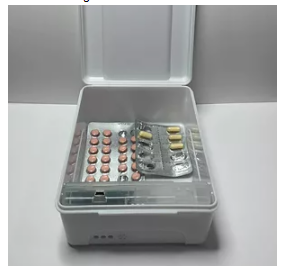
MERM: The Medication Event Reminder Monitor(MERM) is a digital pillbox that provides daily pill-taking reminders and facilitates remote monitoring of medication adherence. This system provides visual and audible reminders for both daily dosing and refill,.transmits this data to a server so that healthcare providers can remotely visualize patients’ dosing histories to support enhanced adherence counselling.
Figure: MERM Box
Recording manual doses in Nikshay
ContentManual recording of Adherence in Nikshay:
in Nikshay, Adherence can only be recorded only if there is corresponding dispensation being issued to a Patient
Figure: Steps to record manual dose in Nikshay
Recording in Patient Treatment Card:
Figure: Filled Treatment card for TB Patient
Recording missed doses in Nikshay
ContentMissed Dose recording in Nikshay:
For recording missed doses in Nikshay, following steps should be followed:
Fullscreen