

Laboratory consumables
ContentThe National TB Elimination Programme (NTEP) laboratory network is composed of National Reference Laboratories (NRLs) at the national level, at the state level Intermediate Reference Laboratories (IRLs) and Culture & Drug Susceptibility Testing (C&DST) laboratories and at the peripheral level Designated Microscopy Centres (DMCs).
Each of these laboratories is responsible for performing various functions at its own levels.

Figure: Flowchart of Laboratory Consumables
Table: Laboratory Consumables
Laboratory Consumables
Description
- Cartridge-based Nucleic Acid Amplification Tests (CBNAAT) machines and Cartridges
- The CBNAAT machines and cartridges are procured by Central TB Division (CTD) and supplied to state/ district/ CBNAAT sites based on their requirement.
- Cartridges are supplied based on the stock availability, consumption and expected case load.
- Recording, reporting and monitoring of cartridges are done through Ni-kshay Aushadhi.
- Binocular Microscope (BM) and LED Fluorescence microscopy (LED-FM)
- The procurement of both items is undertaken by CTD and then delivered to the states/ districts.
- All LED-FM/ BMs should be covered by annual maintenance contracts by states/districts, at the end of their warranty periods.
- NTEP guideline recommends 1 BM for every Designated Microscopy Centre (DMC) and LED FMs only for the high case load facilities with >25 slides per day.
- Along with public sector DMCs, NTEP may also supply BMs to DMCs established in other sectors like ESIS, Public Sector Undertakings, Medical College, etc., if required.
- Sputum containers
Calculation of requirement of sputum containers:
For diagnosis:
- During the first week of each quarter, the number of new pulmonary smear-positive cases registered and treated during the last quarter in the district should be determined and this number should be multiplied by 10.
- 10 is the average number of symptomatic required to be examined for detecting one case of new pulmonary smear-positive tuberculosis and it includes all types of patients.
- Since two sputum specimens are taken for each symptomatic patient, further multiply the number obtained above by 2.
- The final number derived would be the required no. of slides for diagnosis.
For follow-up:
- Two follow-up specimens are taken for the majority of patients (one at the end of the intensive phase and the other at the end of treatment), therefore one sputum container is needed for each follow-up.
- On the last working day of the quarter, count the number of sputum containers in stock and subtract from the required number as calculated above.
- Allow sufficient reserve stock for three months, add 10% to account for wastage of sputum containers, and account for the sputum containers in stock.
- Slides
- One slide is used to examine one specimen in a sputum container. Therefore, order a slightly higher number of slides, than the required no. of sputum containers to account for unavoidable breakage of slides.
- Order for both sputum containers and slides should be placed during the first week of the quarter.
- The supplies will be procured by the state/ district and supplied to all the peripheral health institutions in the district.
Resources
- Training Module (1-4) for Programme Managers and Medical Officers, NTEP, MoHFW, 2020.
- Procurement, Supply Chain Management & Preventive Maintenance, Module 6, CTD.
- Module for Laboratory Technicians, CTD, MoHFW, India, 2005.
- Standard Operating Procedure Manual Procurement & Supply Chain Management, CTD, MoHFW, India, 2018.
Question
Answer 1
Answer 2
Answer 3
Answer 4
Correct answer
Correct explanation
Page id
Part of Pre-test
Part of Post-test
Identify the correct statement from the options given below.
The CBNAAT machines and cartridges are procured at the district level as per the requirement.
The CBNAAT machines and cartridges are procured centrally and supplied to state/ district/ CBNAAT sites based on their requirement.
The CBNAAT machines and cartridges are procured at the Designated Microscopy Centre level as per the requirement.
The CBNAAT machines and cartridges are procured at the Tuberculosis Unit level as per the requirement.
2
The CBNAAT machines and cartridges are procured centrally and supplied to state/ district/ CBNAAT sites based on their requirement.
Yes
Yes
Consumables required at a DMC
Content- Designated Microscopy Centres (DMCs) are the most peripheral laboratory under the National TB Elimination Programme (NTEP) network.
- Any person identified to be a presumptive TB patient is first referred to the nearest DMC for sputum examination or their sputum specimens are collected and transported to the DMC. Therefore, it is very important for the DMCs to maintain an adequate stock of reagents and other consumables.
- The Medical Officer (MO) of DMC is responsible for determining the number of reagents and other materials the DMC needs every month.
- The Senior Tuberculosis Laboratory Supervisor (STLS) ensures these supplies are distributed in a timely manner, as and when required.
- The Lab Technician (LT) is responsible for exhausting the old supplies before the new ones.
The consumables required at the DMC can be broadly categorised as:
- Consumables required for sputum collection
- Consumables required for slide preparation
- Consumables required for smear examination
- Consumables stationery
- Other
Table: List of Items with Technical Specifications of Laboratory Consumables Required for DMCs Sl. No. Name of the item Technical Specifications - For Sputum collection
Sputum containers Cups made of Special Medical Grade Polypropylene, thin plastic, translucent, diameter - 4 cm, capacity - 30 ml, the screwable cap should also be made of Special Medical Grade Polypropylene and should be airtight and leak-proof. Absorbent cotton 500 gms/roll Phenolic compound 5% phenol/ 40% phenolic compound (proprietary Phenyl) diluted to 5% Adhesive labels for sputum containers Sputum specimen transport box Insulated box, made of plastic 10” x 10” x 10”, thickness 1” with lid, handle and nylon belt 1” width 2.5 feet length, nylon strap of 1” width 2 feet length with velcro to strap the lid of the box from side to side. - For slide preparation
Slides for Microscopes Glass slides plain, size = 76mm x 26mm x 1.3mm, clean, scratch-free with smooth edges, uniform refractive index, pack of 50. Broomstick 10 cms in length and thick enough to make good smears. Diamond marker pencil 6" (15.24 cm.) holder with artificial diamond (hard stone) embedded at one end with a screw cap, to mark on microscope glass slides. Grease marking pencil Marking pencil MPS, blue or red coloured, 8" length, to write on glassware/ metal surfaces. Staining racks For drying the slides. Slide boxes for storing slides Glass (or metal) rods For holding slides during the staining process. Forceps, Chitel forceps Stainless steel for slides, 15 cm. Scissors 25 cm, stainless steel Ziehl Neelsen stain Auramine O fluorescent dye for Fluorescence Microscopy (FM) Wherever FM is being done Whatman filter paper No 1 3 ) For smear examination Binocular Microscope With 10x, 40x and oil immersion objective (100x) eyepieces (10x) and spare bulbs and fuses. Immersion oil Filter paper To drain the oil from the slides. Fine Silk and Lint cloth Lens paper For wiping the oil immersion lens after examination of each slide 4) Consumables - Stationery Request form for examination of biological specimen for sputum examination TB Laboratory Register Referral/ Transfer form for treatment Stock register – laboratory Marker pen 5 ) Other Plastic tumblers/ mugs Time (stop-watch) Spirit lamp or Bunsen burner Silica gel Hygroscopic agent to maintain the microscope in a moisture-free environment (to be placed in the cabinet for Binocular Microscope). Alcohol (absolute) Ethanol Cotton, full sleeves Aprons Disposable gloves 6 and 8 inches Methylated spirit Resources
- Training Module (1-4) for Program Managers and Medical Officers, NTEP, MoHFW, 2020.
- Guidelines for Quality Assurance of Smear Microscopy for Diagnosing Tuberculosis, RNTCP Lab Network, CTD, MoHFW, India, 2005.
- Module for Laboratory Technicians, CTD, MoHFW, India, 2005.
Assessment
Question Answer 1 Answer 2 Answer 3 Answer 4 Correct answer Correct explanation Page id Part of Pre-test Part of Post-test Sputum containers and their screwable cap used for sputum collection at the DMC should be made of Special Medical Grade Polypropylene and should be air-tight. True False 1 Sputum containers and their screwable cap used for sputum collection at the DMC should be made of Special Medical Grade Polypropylene and should be air-tight and leakproof. Yes Yes Who ensures that supplies are distributed in a timely manner at DMCs? Treatment Supporter Medical Officer Senior Tuberculosis Laboratory Supervisor (STLS) Lab Technician (LT) 3 The Senior Tuberculosis Laboratory Supervisor (STLS) ensures these supplies are distributed in a timely manner, as and when required.
Yes Yes Consumables required at CBNAAT Lab
ContentThe consumables required at a Cartridge-based Nucleic Acid Amplification Testing (CBNAAT) laboratory include the following:
CBNAAT/ GeneXpert Dx System consisting of CBNAAT machine preloaded with assay software, Computer and the Barcode reader
- CBNAAT assay kit (Figure) consisting of:
- CBNAAT cartridges: Kit contains 10 or 50 individually packed cartridges.
- CBNAAT reagent: 8 ml volume pack per cartridge. The sample reagent solution is clear but may range from colourless to golden yellow.
- Sterile pipette: Individually packed, disposable transfer pipettes, one per each test, with a single mark for the minimum volume of sample transfer to each cartridge.
- CD containing the Assay Definition File.

Figure: Contents of CBNAAT Assay Kit; Source: GLI Training Package for CBNAAT.
- Sputum containers
- Personal protective equipment:
- Laboratory coats
- Disposable gloves
- Disinfectants
- 1% Sodium hypochlorite solution
- 5% Phenol
- 70% Ethanol
-
Power stabiliser (UPS) for uninterrupted power supply to perform CBNAAT assay.
Resources
Assessment
Question Answer 1 Answer 2 Answer 3 Answer 4 Correct answer Correct explanation Page id Part of Pre-test Part of Post-test What are the components of the CBNAAT assay kit? CBNAAT cartridges CBNAAT reagent Sterile pipette All the 3 4 CBNAAT assay kit includes CBNAAT cartridges, CBNAAT reagent and sterile pipette. Yes Yes - CBNAAT assay kit (Figure) consisting of:
Consumables Required at a Truenat Lab
ContentConsumables required for Truenat test provided by the manufacturer include:
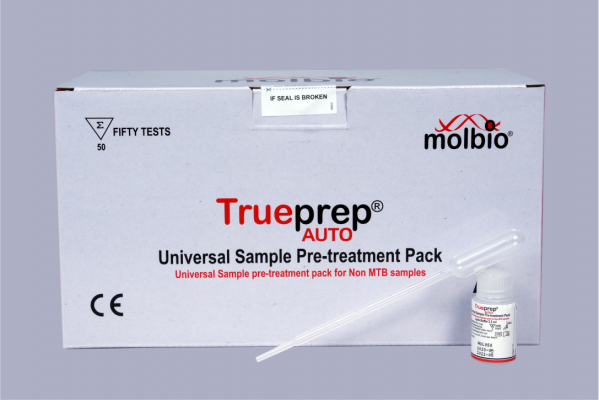
Trueprep AUTO MTB Sample Pre-treatment Pack for sample processing
- Liquefaction buffer
- Lysis buffer
- Disposable transfer pipette (graduated) - 1ml
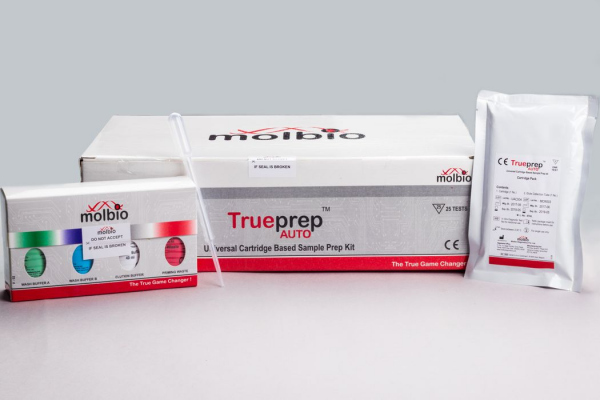
Trueprep AUTO v2 Universal Cartridge Based Sample Prep Kit for DNA extraction
- The Reagent Pack contains the following reagents
- Wash Buffer A
- Wash Buffer B
- Elution Buffer
- Priming Waste
- The Cartridge Pack contains the following
- Cartridge
- Elute collection tube
- Elute collection tube label
- Disposable transfer pipette
- Disposable Transfer Pipettes (graduated) - 3 ml
- Reagent Reset Card
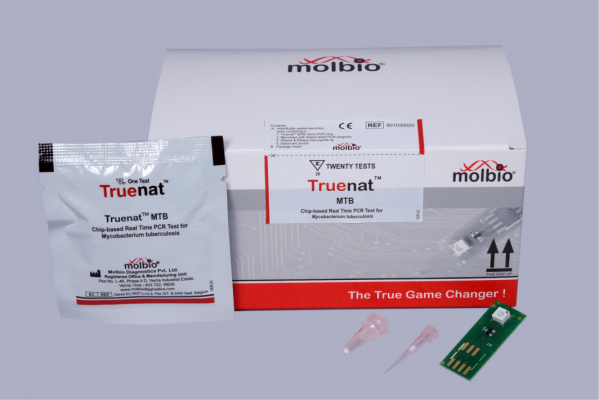
Truenat MTB Chip-based Real-Time PCR test for Mycobacterium tuberculosis
- Truenat MTB micro-PCR chip
- Microtube with freeze-dried PCR reagents
- DNase & RNase free pipette tip
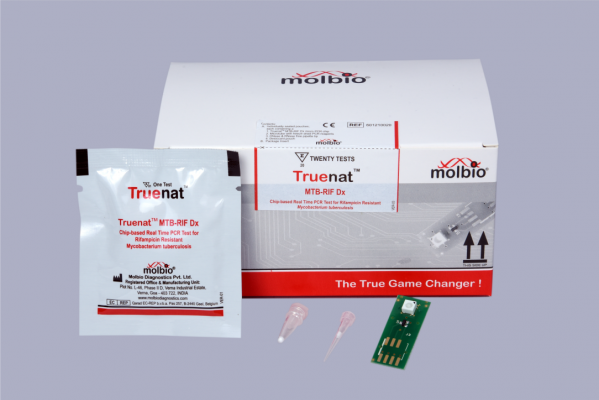
Truenat MTB-RIF Dx Chip-based Real-Time PCR Test for Rifampicin Resistant Mycobacterium tuberculosis
- Truenat MTB-RIF Dx micro-PCR chip
- Microtube with freeze-dried PCR reagents
- DNase & RNase free pipette tip
Other Consumables
- Gloves
- Masks
- Sodium hypochlorite
Resources
- MolBio Diagnostics Product Details
- Practical Guide to Implementation of Truenat™ Tests for the Detection of TB and Rifampicin Resistance
Kindly provide your valuable feedback on the page to the link provided HERE
Stock Register at a DMC
Content- Designated Microscopy Centres (DMCs) are the most peripheral laboratory under the National TB Elimination Programme (NTEP) network. Therefore, it is very important for the DMCs to maintain an adequate stock of all consumables.
- A paper-based stock register is maintained at the DMC and submitted as a part of the ‘Monthly report on programme management, logistics and microscopy’.
- All the DMCs as well as Peripheral Health Institute (PHI) that are a DMC need to fill the second part of this monthly report format for reporting the status of laboratory consumables and equipment (Figure below).

Figure: Monthly report format for reporting status of laboratory consumables and equipment, to be filled by PHI that is DMC.
- The stock register for consumables at the DMC has the provision to enter the information about the stock of consumables that are available at the DMC on the first day of the month, stock received and consumed during the month and stock remaining on the last day of the month along with the requested quantity of new stock.
- The Lab Technician (LT) of the DMC is responsible for exhausting the old supplies before the new ones.
- The Medical Officer (MO) of the DMC is responsible for determining the stocks and the Senior Tuberculosis Lab Supervisor (STLS) should ensure these supplies are distributed in a timely manner, as and when required.
Table: Calculation of Stocks Required at the DMC
Sputum containers For diagnosis:
- During the first week of each quarter, the number of new smear-positive cases registered and treated during the last quarter should be determined and this number should be multiplied by 10.
- Ten is the average number of symptomatic required to be examined for detecting one case of new pulmonary smear-positive tuberculosis.
- Since two sputum specimens are taken for each symptomatic patient, further multiply the number obtained above by 2.
For follow-up:
- Two follow-up specimens are taken for the majority of patients - one at the end of the intensive phase and the other at the end of treatment. One sputum container is needed for each follow-up.
- Once the number of sputum containers required has been calculated, allow sufficient reserve stock for three months, add 10% to account for wastage of sputum containers, and account for the sputum containers in stock.
- On the last working day of the quarter, count the number of sputum containers in stock and subtract from that needed for diagnosis and follow-up examinations as calculated above.
Slides - Once the number of sputum containers needed for the next quarter is determined, order a slightly higher number of slides than the required no. of sputum containers to account for unavoidable breakage of slides.
Reagents - Reagents are supplied to the DMCs on monthly basis by the District TB Centre (DTC).
- The stock register should have the mention of expiry dates of the reagents and the first expiring reagents must be exhausted first based on the First Expiry First Out (FEFO) principle.
- The reagents should not be used beyond three months from the date of preparation.
CBNAAT/ Truenat Machines and Cartridges/ Chips
- These are procured centrally and supplied to state/ district/ sites based on their requirement.
- Recording, reporting and monitoring of cartridges/ chips is done through Nikshay-Aushadhi and they are supplied based on the stock availability, consumption and expected case load.
Binocular Microscopes (BM) and LED Fluorescence Microscopes (FM) - 1 BM is required for every DMC.
- The no. of BM in place and no. of BM in working condition should be reported in the stock register.
- LED FM is supplied to the high case load facilities where the workload is more than 25 slides per day.
Tuberculosis Laboratory Register - Each TB lab register allows for the registration of at least 2000 patients.
- For each lakh population, 75 smear-positive patients are projected, requiring the examination of 750 patients (thrice each). Additional follow-up examinations will bring the number of registers needed to approximately one lab register/ lakh.
- If there are blank pages in the register at the end of a year, it can be used the following year. However, every year should be started on a new page.
Laboratory Form for Sputum Examination - For diagnosis, approximately 10 laboratory forms for sputum examination are needed. (10 is the average number of symptomatic for each case of pulmonary smear-positive tuberculosis identified).
- For follow-up, approximately 0.2 laboratory forms for sputum examination are needed for each pulmonary tuberculosis case. (1 out of 10 examined will be smear-positive, each needs two forms for follow-up. When calculated, out of 10 it will be 0.2)
Resources
- Training Modules (1-4) for Programme Managers and Medical Officers, CTD, MoHFW, GoI, 2020.
- Module for STS Part 2: Ensuring Proper Registration and Reporting. CTD, MoHFW, India.
Assessment
Question Answer 1 Answer 2 Answer 3 Answer 4 Correct answer Correct explanation Page id Part of Pre-test Part of Post-test How many TB Laboratory Register/s is/are required in one year for each DMC? 1 2 3 4 1 Each Tuberculosis Laboratory Register allows for the registration of at least 2000 patients. For each lakh, 75 smear-positive patients are projected, requiring the examination of 750 patients (thrice each). Additional follow-up examinations will bring the number of registers needed to approximately one lab register/ DMC. Yes Yes For follow-up, approximately 0.2 laboratory forms for sputum examination are needed for each pulmonary tuberculosis case.
True False 1 For diagnosis, approximately 10 laboratory forms for sputum examination are needed. 10 is the average number of symptomatic for each case of pulmonary smear-positive tuberculosis identified. 1 out of 10 examined will be smear-positive, each needs two forms for follow-up. When calculated, out of 10 it will be 0.2
Yes
Yes
Assessment of stocks at DMC
ContentStock is critical in assuring that the network of Designated Microscopy Centres (DMC) has all of the necessary supplies, equipment, and commodities to conduct testing. It assures that TB control and patient management are not interrupted by stockouts.
Assessment of stocks at DMC is carried out by estimating the number of presumptive TB cases diagnosed and treated during the last quarter.
There is a standard checklist for the assessment of stock at DMC with the help of this checklist assessment is carried out.
Sl. No
Items
Item Adequate/ Acceptable
Problems Identified
Adequate stock and supply of:
1. Slides Y / N 2.
Lens tissue
Y / N
3.
Filter paper
Y / N
4.
Spirit lamp or bunsen burner
Y / N
5.
Immersion oil
Y / N
6.
Disinfectants
Y / N
7.
Smearing/ staining equipment (staining racks, loops, sticks, etc.)
Y / N
8.
Slide boxes
Y / N
9.
External Quality Assurance (EQA) forms
Y / N
Staining reagents/ equipment:
Within expiry date
1.
1% Carbol fuchsin
Y / N
2.
0.1% Methylene Blue
Y / N
3.
25% Sulphuric acid
Y / N
4.
Distilled water
Y / N
5
Equipment for preparation of stains/ reagents such as balance (for weighing reagents) and measuring cylinder, etc.
Y / N
Assessment is carried out by National Reference Laboratory (NRL)/ Intermediate Reference Laboratory (IRL)/ Central Internal Evaluation (CIE) team yearly once during their Onsite Evaluation (OSE) External Quality Assurance (EQA) visit by the Senior TB Laboratory Supervisor (STLS).
The DMC laboratory technician and the concerned Medical Officer (MO) in charge of the institution have to take adequate measures to address the problems identified.
Resources
Assessment
Question
Answer 1
Answer 2
Answer 3
Answer 4
Correct answer
Correct explanation
Page id
Part of Pre-test
Part of Post-test
Who does the assessment of stock at DMC?
National Reference Laboratory during their annual EQA OSE visit
Intermediate Reference Laboratory during their annual EQA OSE visit
Central Internal Evaluation team
STLS during their monthly OSE visit
All of the above
Assessment of stock at DMC done by NRL, IRL, CIE Team and also by STLS.
Fullscreen