Base Technical Content in text and simple images.

BACTEC MGIT 960 Reagents and Storage

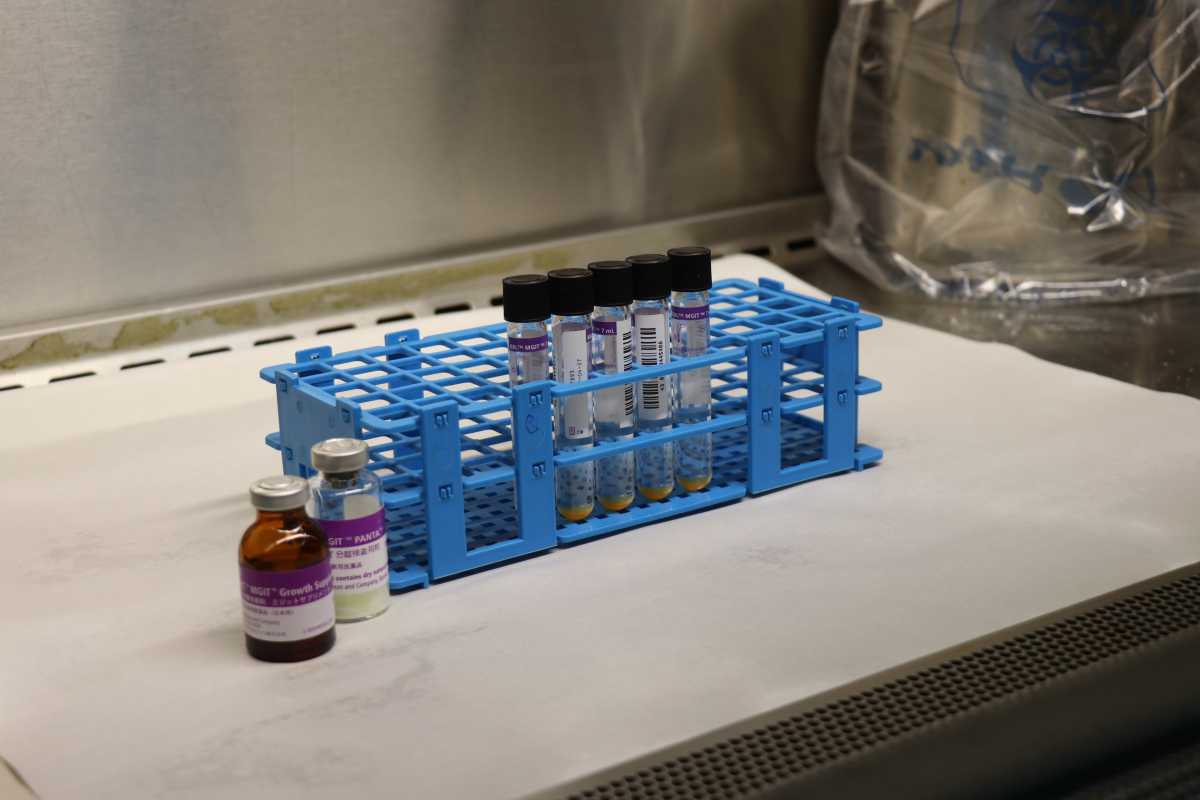
MGIT 960 reagents include (Figure):


  1. MGIT medium; each MGIT 960 tube contains 7.0 ml of modified 7H9 broth base while the manual MGIT tube contains 4.0 ml of the medium
  2. MGIT growth supplement (enrichment); growth supplement for BACTEC MGIT 960
  3. MGIT PANTA, antimicrobial supplement to prevent contamination


Figure: BACTEC MGIT 960 Reagents


Storage of Reagents


Monitoring Quality Indicators of Truenat

Monitoring of key quality indicators or performance indicators of Truenat is important to assess the functioning of the instrument, calibration/ service requirements of the instrument, competency of the technician performing the assays and inventory management. Overall quality indicators should assess:


  1. Total tests done
  2. Type of samples tested
  3. Test failure
  4. Availability of consumables
  5. Turnaround time
  6. Specimen rejected
  7. External Quality Assurance (EQA) results
  8. Instrument downtime


External Quality Assurance for CBNAAT

External Quality Assurance (EQA) ensures that high-quality testing can be carried out efficiently and without interruption. It involves Proficiency Testing (PT) and On-site Evaluation (OSE).


PT is an important component of EQA for Cartridge-based Nucleic Acid Test (CBNAAT) under the National TB Elimination Program (NTEP) and guarantees accurate and reproducible results.


Importance of EQA/ PT for CBNAAT


CBNAAT Results Interpretation

On completion of a test run, the Cartridge-based Nucleic Acid Amplification Test (CBNAAT) gives the following results:

  1. MTB DETECTED; Rif Resistance DETECTED
  2. MTB DETECTED; Rif Resistance NOT DETECTED
  3. MTB DETECTED; Rif Resistance INDETERMINATE
  4. MTB NOT DETECTED
  5. Error
  6. Invalid
  7. No result

Conclusive results include: MTB NOT DETECTED, MTB DETECTED with Rif Resistance/ without Rif Resistance.

Adverse Event Definitions and Classifications

Adverse Drug Reaction (ADR): An unwanted or harmful reaction experienced following the administration of a drug or a combination of drugs, under normal conditions of use, and is suspected to be related to the drug.


Adverse Event (AE):  Any unfavourable and unintended sign (including an abnormal laboratory finding), symptom, or disease that presents in a patient during the course of treatment or the procedure, regardless of whether it is considered related to the medical treatment or procedure.

Subscribe to A0