Default status of page at the time it is added for creation.

Culture Conversion

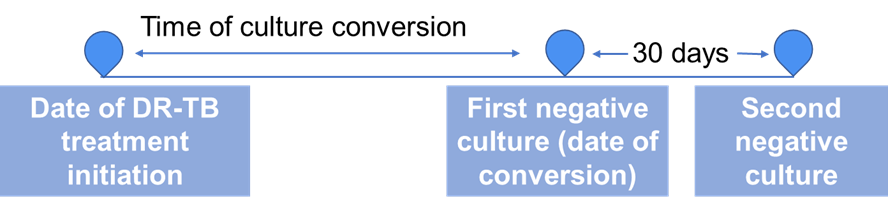
Sputum culture conversion - The transition in sputum culture results from a positive sample growing Mycobacterium tuberculosis to two consecutive negative cultures separated by at least 30 days.


Time to culture conversion is the interval between treatment initiation to date of specimen collection of the first (of the two) negative culture.
 

Transportation of Biological Specimens

All efforts must be made to have decentralized local arrangements for transporting the specimens to the Designated Microscopy Centre (DMC)/ Culture Drug Susceptibility Test (CDST) and molecular Nucleic Acid Amplification Test (NAAT) and Line probe assay (LPA) labs through human volunteers/courier/speed post. The specimens collected should be carefully packed in a box to avoid any spillage or contamination. 


The following points must be considered for the transportation of biological specimens: 

Paper-based Format: Stock Register

The Stock Register is a paper-based recording register kept in drug stores of the National Tuberculosis Elimination Programme (NTEP). It is useful to ensure uninterrupted supply of anti-TB drugs to the patient. The stock register is maintained at the state, district, and tuberculosis unit (TU) drug stores, by the storekeeper. 


Uses of the Stock Register 

State TB Demonstration and Training Centre [STDC]: Organogram and Human Resources

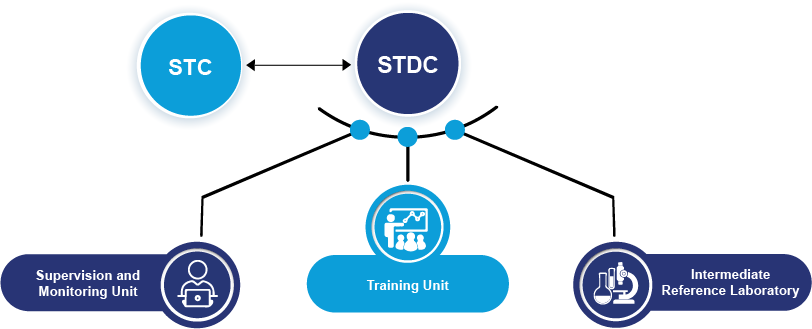
The State Tuberculosis (TB) Cell (STC) is supported by the State TB Training and Demonstration Centre (STDC) in many states through its three units – Training Unit, Supervision and Monitoring Unit and an Intermediate Reference Laboratory (IRL). This relationship is shown in the figure below.

Figure: STDC and its Supporting Units


Targets of End TB Strategy

The End TB (tuberculosis) Strategy targets for 2035 are:

  • 95% reduction in tuberculosis deaths (compared with 2015)
  • 90% reduction in tuberculosis incidence rate (less than 10 tuberculosis cases per 100 000 population)
  • No affected families facing catastrophic costs due to tuberculosis.


Goal of the End TB Strategy Approach

The goal of the End TB (tuberculosis) strategy is to end the global TB epidemic.


Everyone with TB should have access to the innovative tools and services they need for rapid diagnosis, treatment and care. This is a matter of social justice, fundamental to our goal of universal health coverage. Given the prevalence of drug-resistant tuberculosis, ensuring high-quality and complete care will also benefit global health security.


Gloves for TB Lab Personnel

  • Gloves are made for protecting the hands of health professionals from contaminated and infectious surfaces.
  • Lab staff must wear gloves for all the procedures that involve direct or accidental contact with infectious material​​.
  • Gloves are made for single-use (disposable gloves) and should not be re-used​ (see Figure 1)
  • ​Gloves are made from vinyl, latex or nitrile​.
  • For the staff who are allergic to latex and when performing PCR, nitrile gloves should be available ​for use.

​​

Laboratory Gowns for Use by Lab Personnel

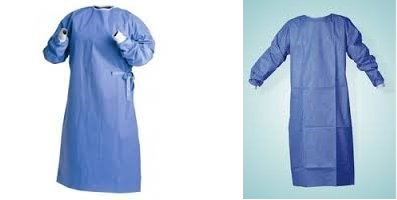
Laboratory Gowns (Figure 1)

  • Protect the skin and clothing from large droplets of infectious or hazardous materials that may be splattered in the laboratory.
  • Gowns must be worn for specimen processing, tuberculosis (TB) culture and drug sensitivity testing (DST).
  • The gown must have a solid front and close and tie in the back.
  • The gown must have long-sleeves and cuffs.
  • For maximum protection, gloves must be pulled over the cuff.

Subscribe to Page Prioritised