

color coding and type of container
ContentThe National TB Elimination Programme (NTEP) utilizes different coloured bags for the segregation of waste generated in TB laboratory settings as shown in the table below.
Table: Waste Segregated and Collected According to Colour-coded Bags
Yellow bag:
- Broomsticks
- Parafilm tape & plastic bag – contaminated with samples
- Löwenstein-Jensen (LJ) media without the bottle
- Microbial sample/ blood/ body fluids contaminated paper/ cotton/ swab
- Blood bags
- Microbiological cultures Truenat chips (MTB/ Rif)
- Used mask/ gowns
- Expired medicines/ drugs/ antibiotics
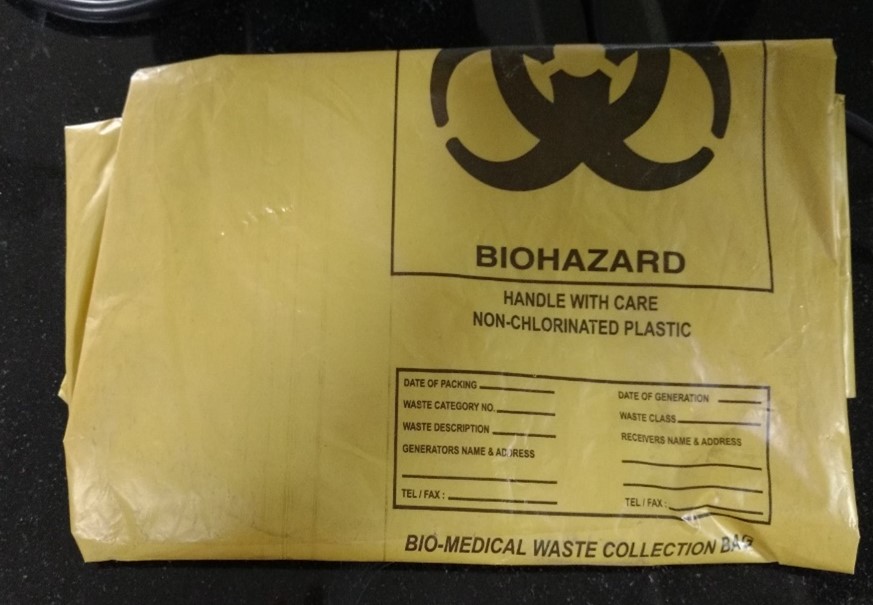
Red bag:
- Specimen collection tubes
- Sputum cups
- Cartridge Based Nucleic Acid Amplification Test (NAAT)/ Truenat cartridges
- Infected plastic
- Contaminated tips
- Pasteur pipettes
- Polymerase Chain Reaction (PCR) tubes
- Mycobacteria Growth Indicator Tube (MGIT) tubes
- Disposable LJ tubes
- Contaminated falcon tubes
- Used gloves
- Contaminated droppers
- Empty Cartridge-based Nucleic Acid Amplification Test (CBNAAT) reagent bottles
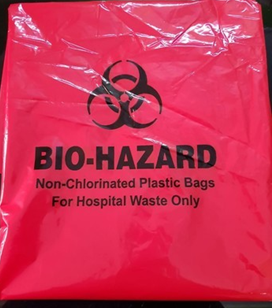
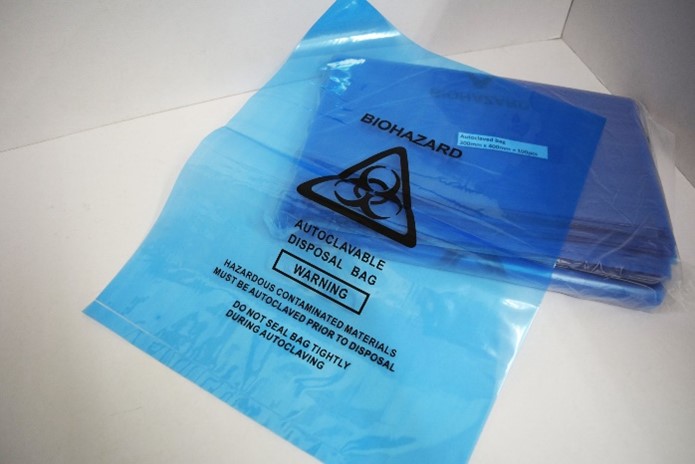
Blue bag:
Glass slide in Truenat machine and used microscopy slides. Slides should not be broken.
All these bags are to be labelled with the Biohazard logo (figure below) on them.
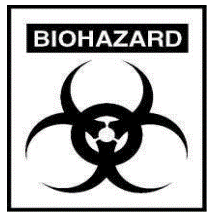
Figure: Biohazard Logo
- Waste generated in the Culture Drug Susceptibility Testing (CDST) laboratories is autoclaved prior to segregation in colour-coded bags.
- The biohazard materials are collected and handed over to handlers authorized by the pollution control board.
- Personnel handling/segregating biomedical wastes must use appropriate Personal Protective Equipment (PPE) and should be trained in spill management.
Resources
- Guidelines for Programmatic Management of Drug-resistant Tuberculosis in India, 2021.
- Guidelines for Management of Healthcare Waste as per Biomedical Waste Management Rules, 2016.
Kindly provide your valuable feedback on the page to the link provided HERE
Disposing Off Contaminated Material Safely in DMC Laboratory Settings
ContentThe Laboratory Technician (LT) must safely discard contaminated, biohazard waste generated by tuberculosis (TB) laboratories. This waste must be discarded along with the overall waste of the health facility in which TB services are provided.
There are 2 types of waste generated from DMC laboratory settings:
- Sputum containers with specimen and wooden sticks
- Stained slides
Disposal of Sputum Cups with Left-over Specimen, Lids and Wooden Sticks
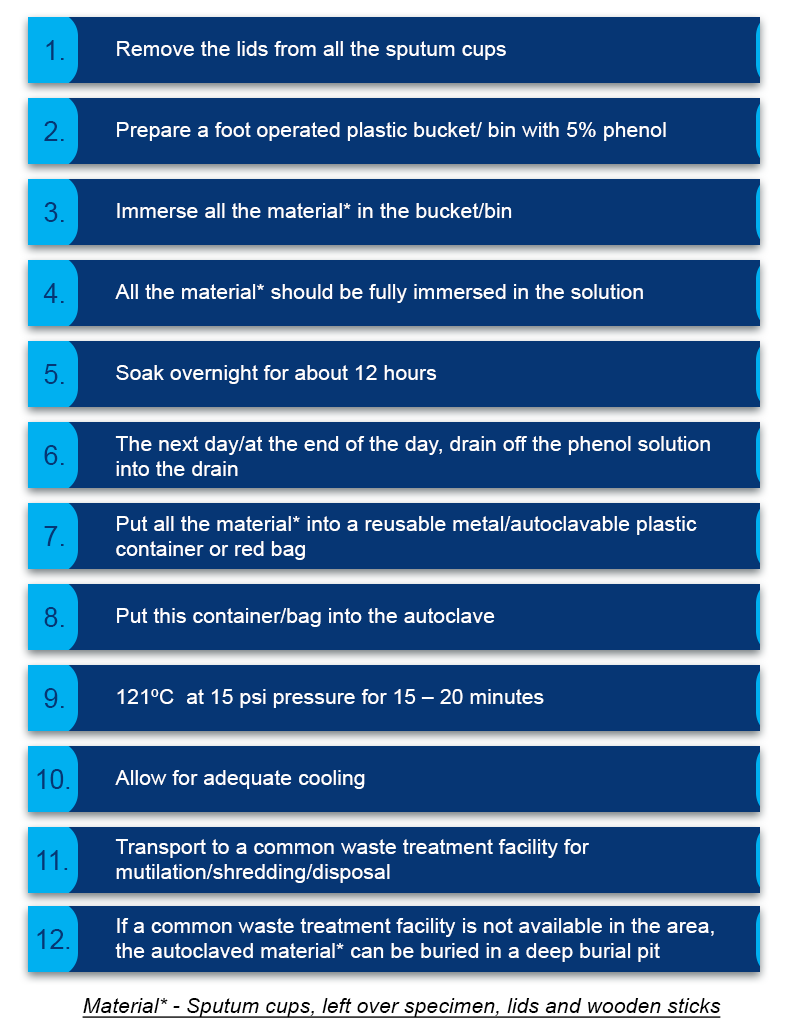
Figure 1: Steps for disposal of sputum cups with specimen, lids and wooden sticks
Important Points to Remember
- If autoclaving is not possible, boil in a pressure cooker of 7 litre capacity with water and submerge the contents for at least 20 minutes
- LTs and support staff handling biological waste need to wear gloves
- The red bag used for autoclaving must:
- Have a biohazard symbol
- Have adequate strength to withstand the load of the waste material
- Be made of non-PVC plastic material
Disposal of Stained Slides
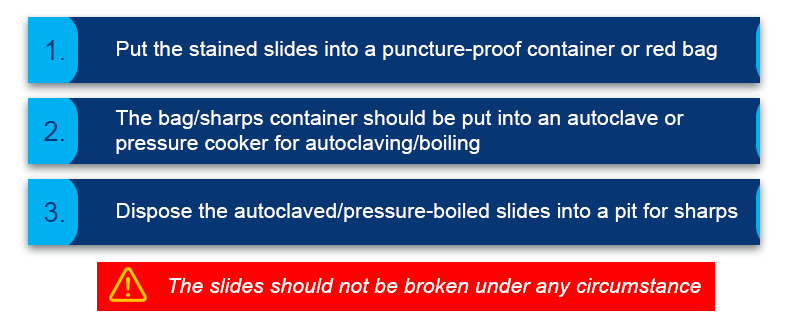
Figure 2: Steps for disposal of stained slides
Resources
Kindly provide your valuable feedback on the page to the link provided HERE
Mercury Spill in TB Lab Settings
ContentMercury is a harmful metal, and accidental spillage of mercury needs to be handled with care.
- Use of mercury thermometer should be avoided in the laboratory.
- A spill kit for mercury must be available if metallic mercury is present in the lab. The directions provided in the kit should be followed
- Spilled metallic mercury forms little spheres that roll into corners and cracks on the floor. If not completely cleaned up, mercury vapor will continue to be released into the air
- DO NOT use mercury thermometers in ovens. If the thermometer breaks, the heat will lead to dangerous concentrations of mercury in the air.
- Exercise additional caution, when placing or storing mercury thermometers to reduce the risk of breakage
- The Standard Operating Procedures (SOP) for Mercury Spill management should be displayed in TB laboratories
Handling Mercury Spill
Items needed:
- Apron
- Gloves
- Two cards/X-ray films
- Masks
- Powdered Sulphur (optional)
Cleaning the Spill
- Collect the mercury, using an index card or X-ray film, to form a pile or globule
- Mercury-absorbing powders, such as sulphur, can be used to amalgamate mercury
- Mercury waste and materials used in spill clean-up must be promptly placed in a sealed bottle
- Store metallic mercury in tightly closed, sturdy containers
- After all visible mercury has been collected, the area should be washed with a detergent solution, rinsed, and allowed to dry before use. This treatment should remove most remaining mercury residue
- Under no circumstances should mercury be swept with a broom or vacuumed with an ordinary vacuum cleaner. These procedures will disperse mercury more quickly into the air and spread the contamination
Resources
Kindly provide your valuable feedback on the page to the link provided HERE
Fullscreen